- Borrowed and Blue
- Posts
- The Queersar Not An Award 2020
The Queersar Not An Award 2020
For excellence in queer SFF and SFF with queers released in 2020

Eddie
March 09, 2026
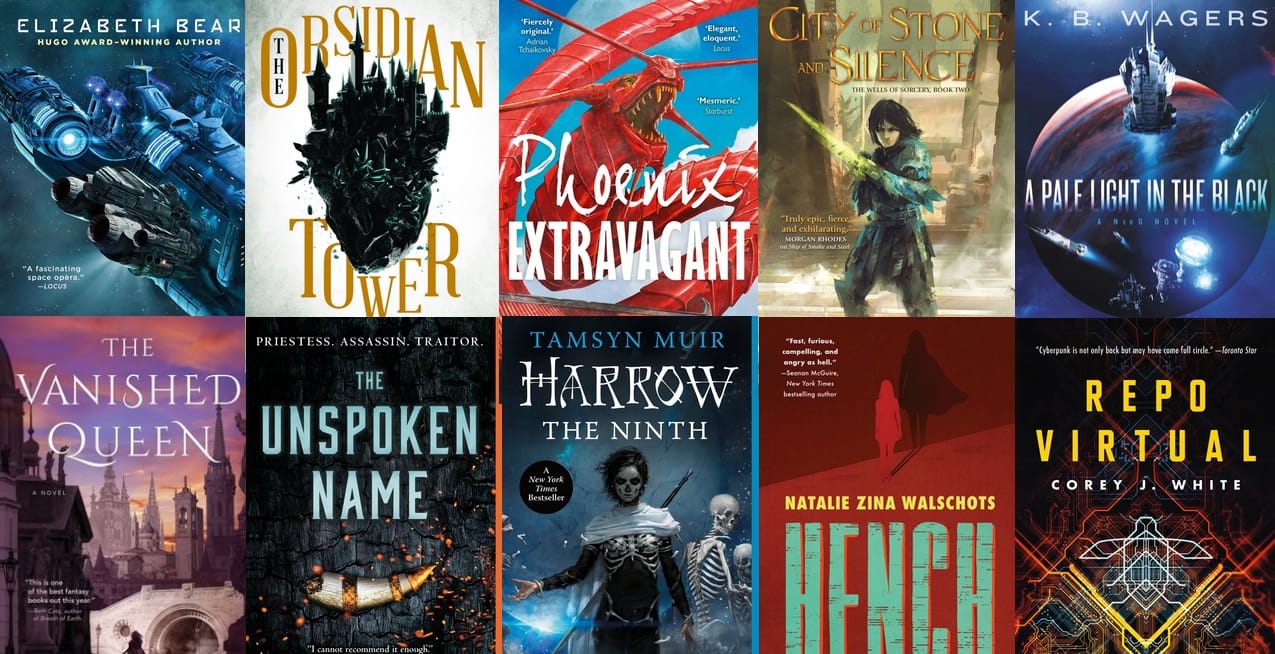
After a few weeks of soliciting recommendations, talking to reviewer friends, and some furious reading and rereading of promising works, I’m ready to present the first honour list for my quixotic spiritual continuation of the Gaylactic Spectrum award! As I read up on potential honourees, I must admit my first thought was “why did I do this to myself?!” 2020 was a historically crap year in general terms, but the standard of queer speculative fiction out that year - and, initial impressions suggest, across the 5 years I’m covering in this project - was incredibly high. I’ve had to make some really hard choices, and leave out work very likely just as deserving of being highlighted as the ten (plus one) I set out below. So please if your favourite isn’t on there it’s absolutely not a slight on anyone; I set myself some parameters with how I was running this and now I have to stick to them.
Conversely, my final thought as I finalised the list (I’m writing this introduction last) is that I actually think there might be something to my weird idea. The main list has only one Hugo nominee and zero Nebula or Lambda noms. Some have no award recognition at all, and those that do rely heavily on the excellent work of the Locus award top 10s to get any award attention. All of this is to say I think all of these books are great examples of the intersection of queerness and speculative fiction, mostly (but not entirely) in the aesthetic mode of the rapidly dwindling big SFF publisher midlist. I think all are deserving of attention, and most did not get the level of it that they warranted.
I hope you discover, or are reminded of, some great work from that blighted peak of the pandemic year. If you do, please share with others you might appreciate - this project only has a purpose beyond my own curiosity (which, hey, is what got it started so that’s not nothing!) if it brings more eyes to these hugely enjoyable pieces of queer spec fic.
So without further ado, please see the 10 (plus one) books I’m recognising as part of this not-an-award for the year 2020. We kick off with a brief note of our Hall of Already Famous entry, then nine honourees (in alphabetical order), and conclude with the book I believe is particularly deserving of a (neglected) spotlight from 2020.
The Hall of Already Famous 2020
A reminder of what I’m doing with this category. Where a book has already had recognition from major mainstream SF awards and the major queer SF award in the Lambda Award, it feels like it doesn’t need additional attention from this project. So such books won’t be one of my ten honour list titles. But it feels wrong to ignore the existence of such widely acclaimed books, thus the Hall of Already Famous. I won’t provide commentary, just note them, their relevant awards, and their blurb.
Rebecca Roanhorse: Black Sun
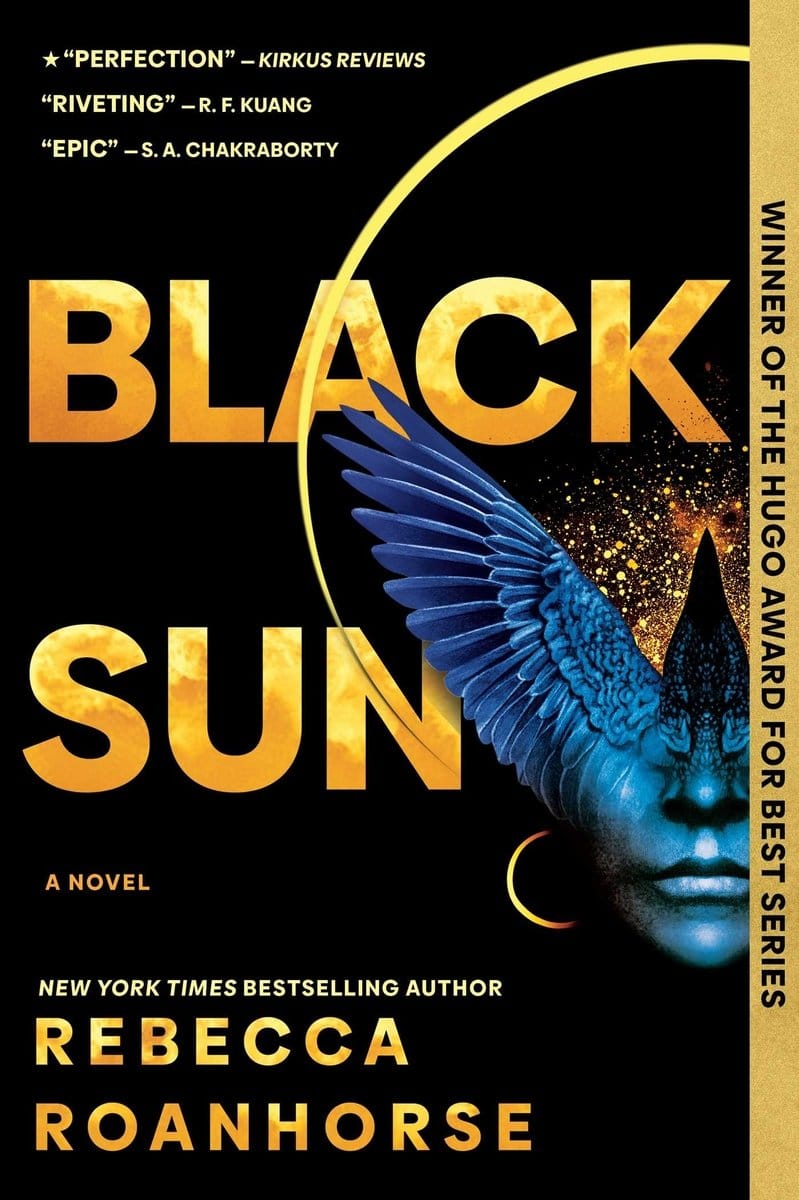
In the holy city of Tova, the winter solstice is usually a time for celebration and renewal, but this year it coincides with a solar eclipse, a rare celestial even proscribed by the Sun Priest as an unbalancing of the world.
Meanwhile, a ship launches from a distant city bound for Tova and set to arrive on the solstice. The captain of the ship, Xiala, is a disgraced Teek whose song can calm the waters around her as easily as it can warp a man’s mind. Her ship carries one passenger. Described as harmless, the passenger, Serapio is a young man, blind, scarred, and cloaked in destiny. As Xiala well knows, when a man is described as harmless, he usually ends up being a villain.
Crafted with unforgettable characters, Rebecca Roanhorse has created a “brilliant world that shows the full panoply of human grace and depravity” (Ken Liu, award-winning author of The Grace of Kings). This epic adventure explores the decadence of power amidst the weight of history and the struggle of individuals swimming against the confines of society and their broken pasts in this “absolutely tremendous” (S.A. Chakraborty, nationally bestselling author of The City of Brass) and most original series debut of the decade.
Award nominations: The Hugo, Nebula, and Lambda Awards in 2021.
Award wins: The Hugo Award for Best Series in 2025.
Honour List
Elizabeth Bear: Machine (Saga Press)
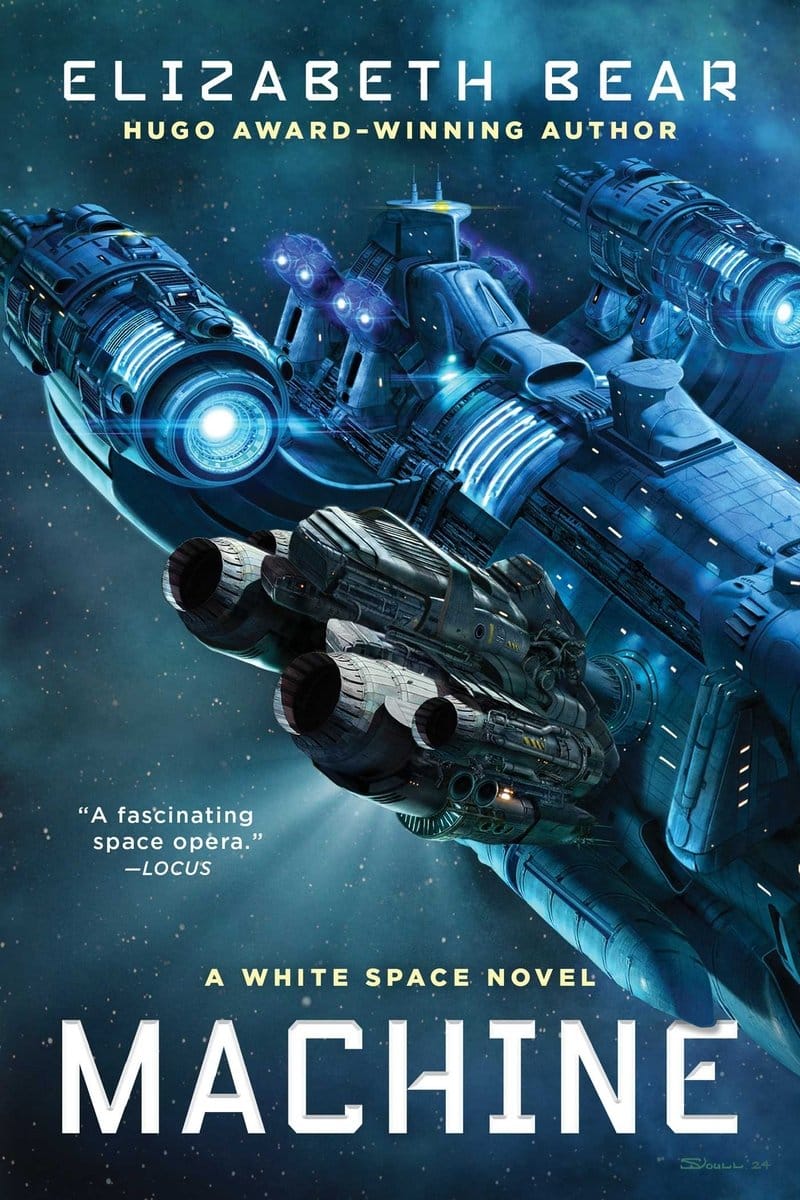
A ripsnorter of a space opera slash mystery which just works. Those two genres might not immediately seem hugely compatible but in Bear’s hands they are. The point of view character is queer human woman in the multispecies, galaxy-spanning Synarche who stumbles across an ancient ark ship. Shenanigans ensue. The world-building is great, the character work and narrative voice superb, and the mystery plot provides a great forward momentum. Bear also happens to have been the most nominated author across the history of the Gaylactic Spectrum novel award, so a very good person to have, by accident of alphabet, as the first person on my attempt to continue that award’s kaupapa (this is still not an award!).
White Space: Book 2 (but 95% stands alone).
Meet Doctor Jens.
She hasn’t had a decent cup of coffee in fifteen years. Her workday begins when she jumps out of perfectly good space ships and continues with developing treatments for sick alien species she’s never seen before. She loves her life. Even without the coffee.
But Dr. Jens is about to discover an astonishing mystery: two ships, once ancient and one new, locked in a deadly embrace. The crew is suffering from an unknown ailment and the shipmind is trapped in an inadequate body, much of her memory pared away.
Unfortunately, Dr. Jens can’t resist a mystery and she begins doing some digging. She has no idea that she’s about to discover horrifying and life-changing truths.
Award nominations: Dragon Award, Locus Award
Lisbeth Campbell: The Vanished Queen (Saga Press)
A hard, uncompromising standalone fantasy of the cost of revenge and what it takes to unseat an unjust king. Grim without being grimdark, hopeful without being remotely cozy, people and principles are compromised and things are lost to the achieve what might(?) be justice. Has a few structural flaws at the beginning and the end, but ultimately the excellent character work carries it & makes for a hugely impressive debut novel. A broadly queernorm world with a bisexual main character. This one was badly under-read.
Long ago, Queen Mirantha vanished. King Karolje claimed she was assassinated by a neighboring ruler, but her people knew the truth: the king had Disappeared her himself.
Now the queen’s disappearance is hardly a memory—merely one among many horrors the king’s reign has wrought. But when Anza, a young student impassioned by her father’s unjust execution, finds the missing queen’s diary, she is inspired by Mirantha’s words—joins the resistance group to overthrow the king.
Prince Esvar is the second son to an evil king. Trapped under his thumb and desperate for a way out, a chance meeting with Anza gives him the opportunity to join the resistance. Together, they might have the leverage to move against the king—but if they fail, their deaths could mean a total loss of freedom for generations to follow. In this dangerous game of court politics, one misstep could lead to a fate worse than death.
Award nominations: None
Melissa Caruso: The Obsidian Tower (Orbit)
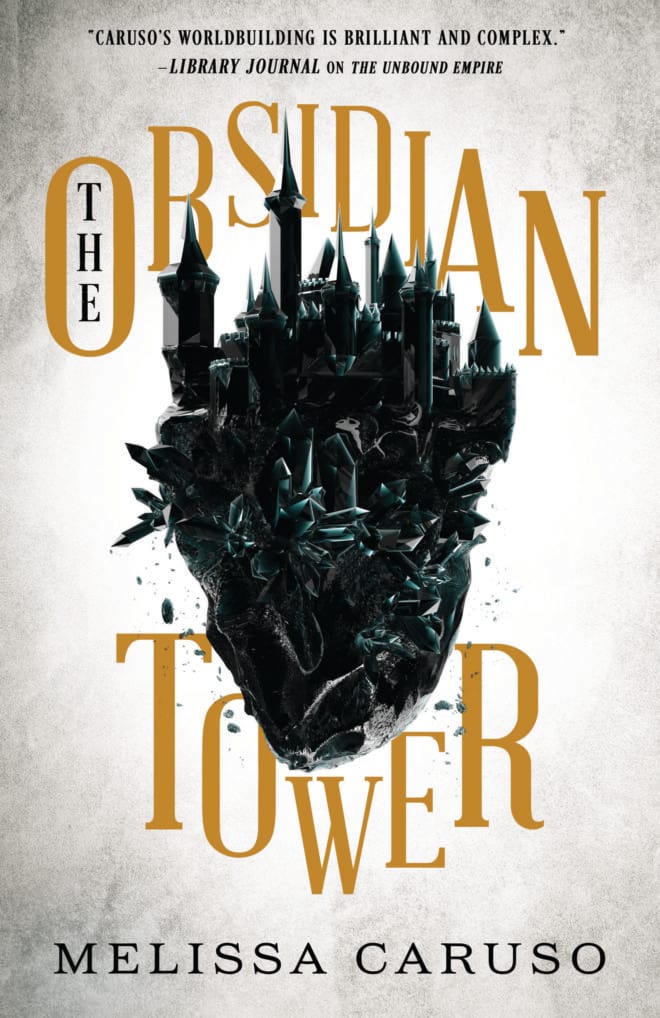
Caruso has put out a lot of excellent books, virtually all of which are brimming with queers, over the five years I’ve covered; they’re pretty much all good. I chose The Obsidian Tower of those because it’s such a good illustration of what Caruso does well. High action without sacrificing character or feeling rushed. Great lore and world-building without being stultifying, spooling out information as it goes without ever feeling like the plane is being built while we’re trying to fly it (this is really hard). Add in an absolute banger of an opening and a great setup for the rest of the series while still finishing its own plot arc and you have something truly impressive. Features a bisexual main character and major lesbian, ace, and nonbinary characters.
Rooks and Ruin: Book 1
The mage-marked granddaughter of a ruler of Vaskandar, Ryx was destined for power and prestige at the top of Vaskandran society. But her magic is broken; all she can do is uncontrollably drain the life from everything she touches, and Vaskandar has no place for a mage with unusable powers.
Then, one night, two terrible accidents befall her: Ryx accidentally kills a visiting dignitary in self-defense, activating a mysterious magical artifact sealed in an ancient tower in the heart of her family’s castle.
Ryx flees, seeking a solution to her deadly magic. She falls in with a group of unlikely magical experts investigating the disturbance in Vaskandar—and Ryx realizes that her family is in danger and her domain is at stake. She and her new colleagues must return to the family stronghold to take control of the artifact that everyone wants to claim—before it destroys the world.
Award nominations: None
A K Larkwood: The Unspoken Name (Tor)
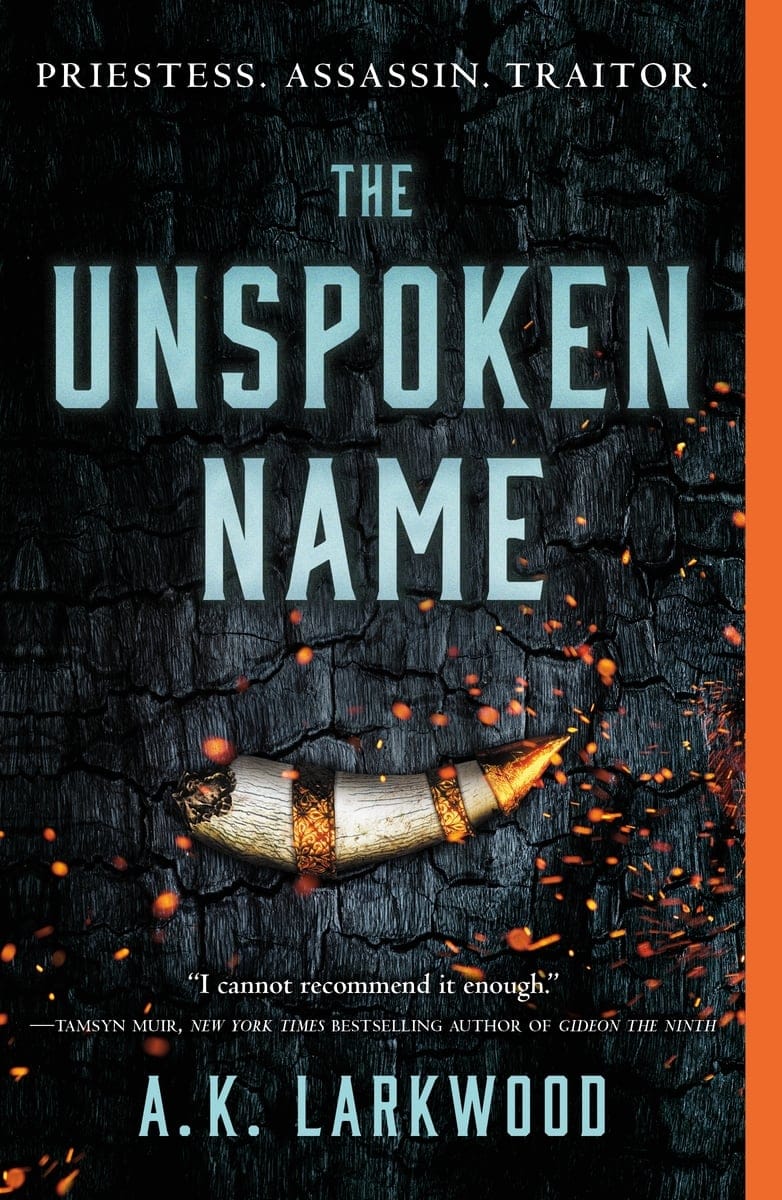
Man, this book is so much fun. Kitchen sink world-building (complimentary); cults! Ancient libraries! Multiversal portal networks! Dead(?) gods! Queer orc assassins! Flying ships! The worst gays (again, complimentary). It’s to Larkwood’s credit that she keeps firm control over what could have been a total mess to produce an atmospheric, engaging, well-written romp. Also uses time skips to good effect, something that seems largely to have gone out of fashion in modern fantasy.
The Serpent Gates: Book 1
What if you knew how and when you will die?
Csorwe does—she will climb the mountain, enter the Shrine of the Unspoken, and gain the most honored title: sacrifice.
But on the day of her foretold death, a powerful mage offers her a new fate. Leave with him, and live. Turn away from her destiny and her god to become a thief, a spy, an assassin—the wizard's loyal sword. Topple an empire, and help him reclaim his seat of power.
But Csorwe will soon learn—gods remember, and if you live long enough, all debts come due.
Award nominations: Locus Award. Larkwood also nominated for the Astounding Award in this year.
Yoon Ha Lee: Phoenix Extravagant (Solaris)
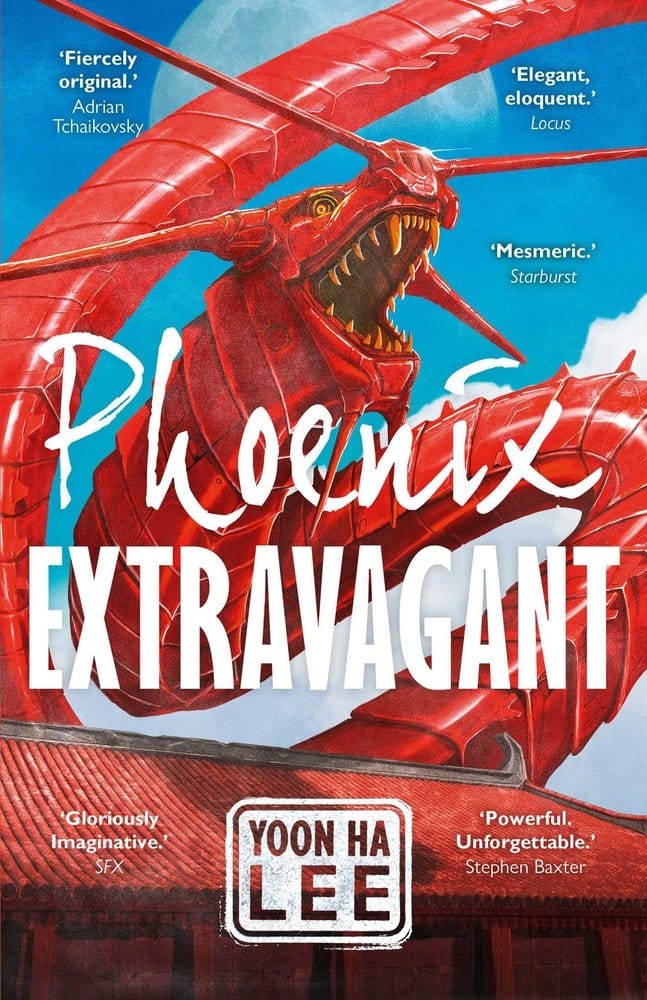
Hugely engaging standalone technofantasy set in an thinly veiled secondary world version of the Japanese occupation of Korea. Precise character work, lucid prose and incisive reflections on the intersection of art and colonialism. Deeply queer, with a non-binary main character and a number of other queer supporting characters. Also features a technomagical dragon automaton. I’m firmly convinced that fiction where characters act under constraint is much more interesting than power fantasies of total freedom, and Lee here masterfully explores a world where every choice is constrained.
Dragons. Art. Revolution.
Gyen Jebi isn’t a fighter, or a subversive. They just want to paint.
One day they’re jobless and desperate; the next, Jebi finds themself recruited by the Ministry of Armor to paint the mystical sigils that animate the occupying government’s automaton soldiers.
But when Jebi discovers the depths of the Razanei government’s horrifying crimes—and the awful source of the magical pigments they use—they find they can no longer stay out of politics.
What they can do is steal Arazi, the ministry’s mighty dragon automaton, and find a way to fight…
Award nominations: None
Tamsyn Muir: Harrow the Ninth (Tordotcom)
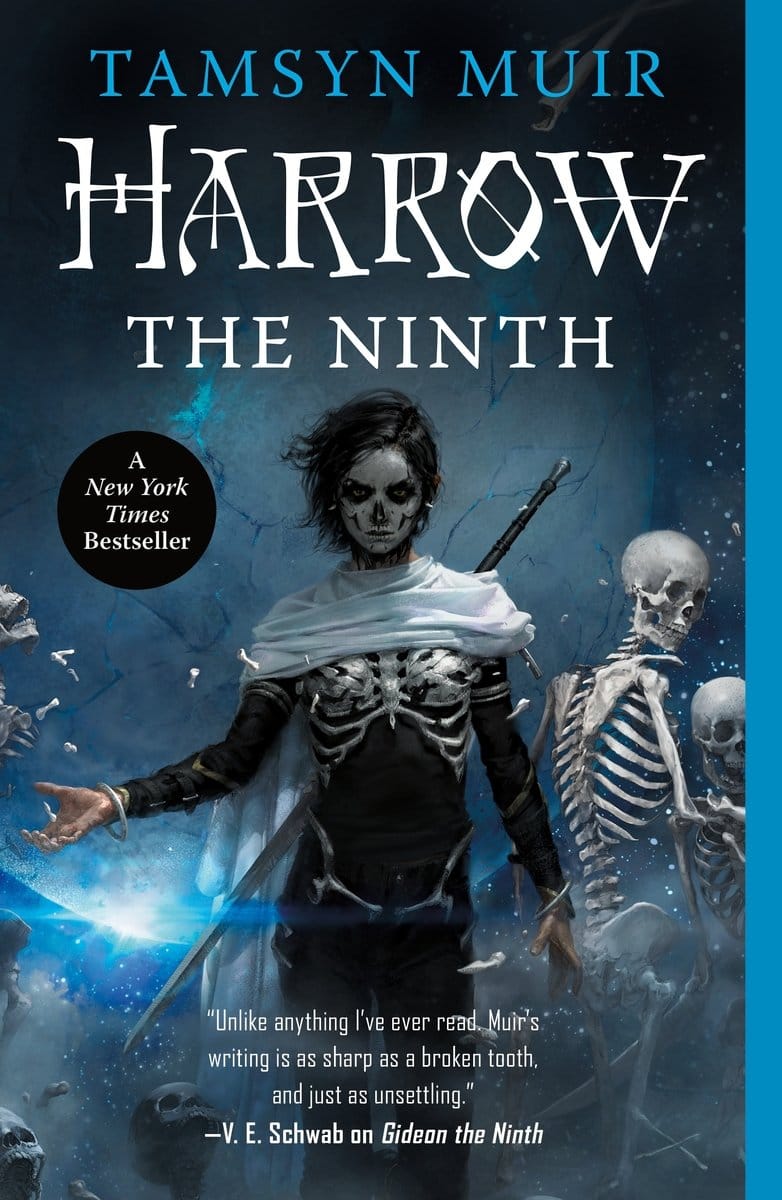
It would have been easy for Tamsyn Muir to serve up more of the name after the all-conquering success of Gideon the Ninth. More lesbians papering over trauma with snark, more haunted house mysteries in space. Instead she had the gumption to do a tonal and stylistic handbrake turn and serve up Harrow. Narrative games abound, from fractured timelines to multiple unreliable narrators to alternating second and third person. And the (bonkers) worldbuilding kept behind the curtain in Gideon is at least partially revealed. There is a lot going on, and Muir, impressively, has it mostly in hand. But only mostly – the literary games mean the narrative thread is occasionally hard to grasp, and we’re at an emotional remove for a good part of the novel. But it is so ambitious and so out of nowhere and so nearly totally successful that it remains a hugely impressive achievement.
The Locked Tomb: Book 2
She answered the Emperor's call.
She arrived with her arts, her wits, and her only friend.
In victory, her world has turned to ash.
After rocking the cosmos with her deathly debut, Tamsyn Muir continues the story of the penumbral Ninth House in Harrow the Ninth, a mind-twisting puzzle box of mystery, murder, magic, and mayhem. Nothing is as it seems in the halls of the Emperor, and the fate of the galaxy rests on one woman's shoulders.
Harrowhark Nonagesimus, last necromancer of the Ninth House, has been drafted by her Emperor to fight an unwinnable war. Side-by-side with a detested rival, Harrow must perfect her skills and become an angel of undeath—but her health is failing, her sword makes her nauseous, and even her mind is threatening to betray her.
Sealed in the gothic gloom of the Emperor's Mithraeum with three unfriendly teachers, hunted by the mad ghost of a murdered planet, Harrow must confront two unwelcome questions: is somebody trying to kill her? And if they succeeded, would the universe be better off?
Award nominations: Hugo Award, Locus Award, Goodreads Choice Award
Natalie Zina Walschots: Hench (William Morrow)
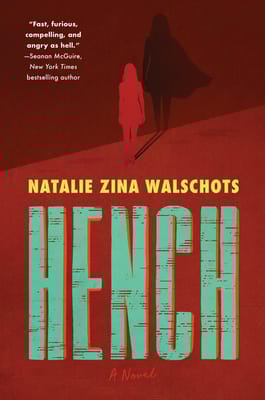
Superhero (or, here, incipient supervillian) story as black workplace comedy, and it works really well. Protagonist who works for, essentially, a villain mook labour hire company, gets injured in a superhero fight, schemes to bring down superheroes using spreadsheets. Genuinely funny but with an equally genuine edge, Walschots take the concept and runs with it. Audacious plotting, incisive character work, and interesting reflections on office politics, disability, and state violence make for an excellent book which was warmly received by critics on release but inexplicably evaded award attention (beyond a Locus award shortlist and, uh, the Goodreads choice award).
Hench: Book 1
Anna does boring things for terrible people because even supervillains need office help and she needs a job. Working for a monster lurking beneath the surface of the world isn’t glamorous. But is it really worse than working for an oil conglomerate or an insurance company? In this economy?
As a temp, she’s just a cog in the machine. But when she finally gets a promising assignment, everything goes very wrong, and an encounter with the so-called “hero” leaves her badly injured. And, to her horror, compared to the other bodies strewn about, she’s the lucky one.
So, of course, then she gets laid off.
With no money and no mobility, with only her anger and internet research acumen, this unlikely antihero discovers her suffering at the hands of a hero is far from unique. When people start listening to the story that her data tells, she realizes she might not be as powerless as she thinks.
Because the key to everything in this dark comedy is data: knowing how to collate it, how to manipulate it, and how to weaponize it. By tallying up the human cost these caped forces of nature wreak upon the world, she discovers that the line between good and evil is mostly marketing. And with social media and viral videos, she can control that appearance.
It’s not too long before she’s employed once more, this time by one of the worst villains on earth. As she becomes an increasingly valuable lieutenant, she might just save the world.
A sharp, witty, modern debut, this subversive superhero story Hench explores the individual cost of justice through a fascinating mix of Millennial office politics, heroism measured through data science, body horror, and a profound misunderstanding of quantum mechanics.
Award nominations: Locus Award, Goodreads choice for Science Fiction
Django Wexler: City of Stone and Silence (Tor Teen)
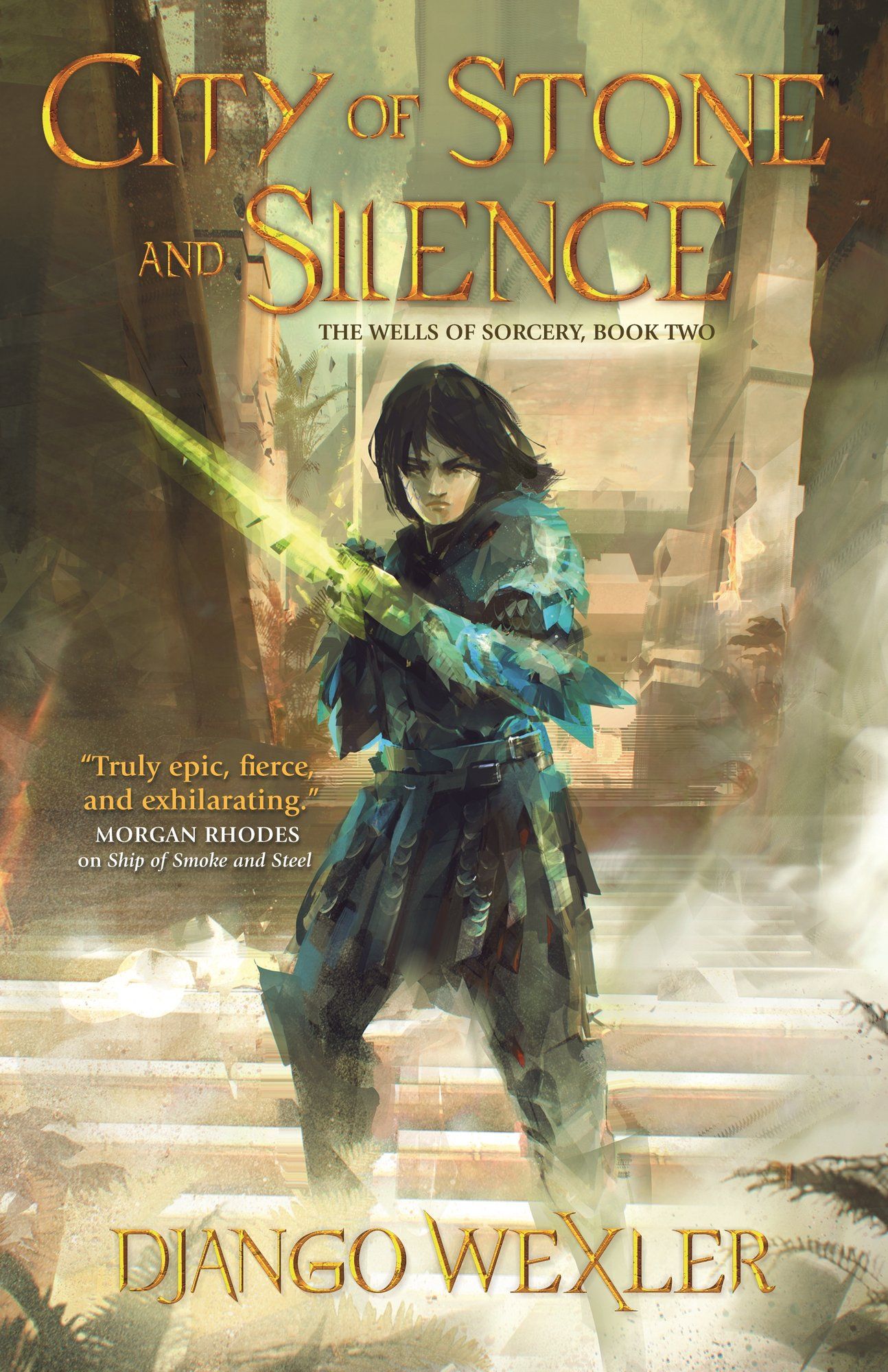
Like Caruso above, Django Wexler has produced a lot of quality speculative fiction over the last five years and I could have picked one of a number to find a place on a number of years’ lists. But his first venture into YA with the Wells of Sorcery series is a spectacular, and it is the second book in this series - imo the high point - that I’ve chosen from his oeuvre. Both the first and third are very good, but book 1 is necessarily a fair bit of scene setting and book 3’s ending arrived (and departed) a couple of dozen pages more quickly than is ideal. City of Stone and Silence is a sweet spot of high action, solid character development, and hugely entertaining technofantasy worldbuilding. The addition of a second narrative thread (not present in the first book) is also all for the better, broadening the world and shifting a character who had been a plot McGuffin initially to someone with their own agency and own motivations. Bisexual main character and a panoply of queers in the supporting cast.
The Wells of Sorcery: Book 2
After surviving the Vile Rot, Isoka, Meroe, and the rest of Soliton’s crew finally arrive at Soliton's mysterious destination, the Harbor—a city of great stone ziggurats, enshrouded in a ghostly veil of Eddica magic. And they're not alone.
Royalty, monks, and madmen live in a precarious balance, and by night take shelter from monstrous living corpses. None know how to leave the Harbor, but if Isoka can't find a way to capture Soliton and return it to the Emperor's spymaster before a year is up, her sister's Tori's life will be forfeit.
But there's more to Tori's life back in Kahnzoka than the comfortable luxury Isoka intended for her. By night, she visits the lower wards, risking danger to help run a sanctuary for mage-bloods fleeing the Emperor's iron fist. When she discovers that Isoka is missing, her search takes her deep in the mires of intrigue and revolution. And she has her own secret—the power of Kindre, the Well of Mind, which can bend others to its will. Though she's spent her life denying this brutal magic, Tori will use whatever means she has to with Isoka's fate on the line...
Award nominations: None
Corey J. White: Repo Virtual (Tordotcom)
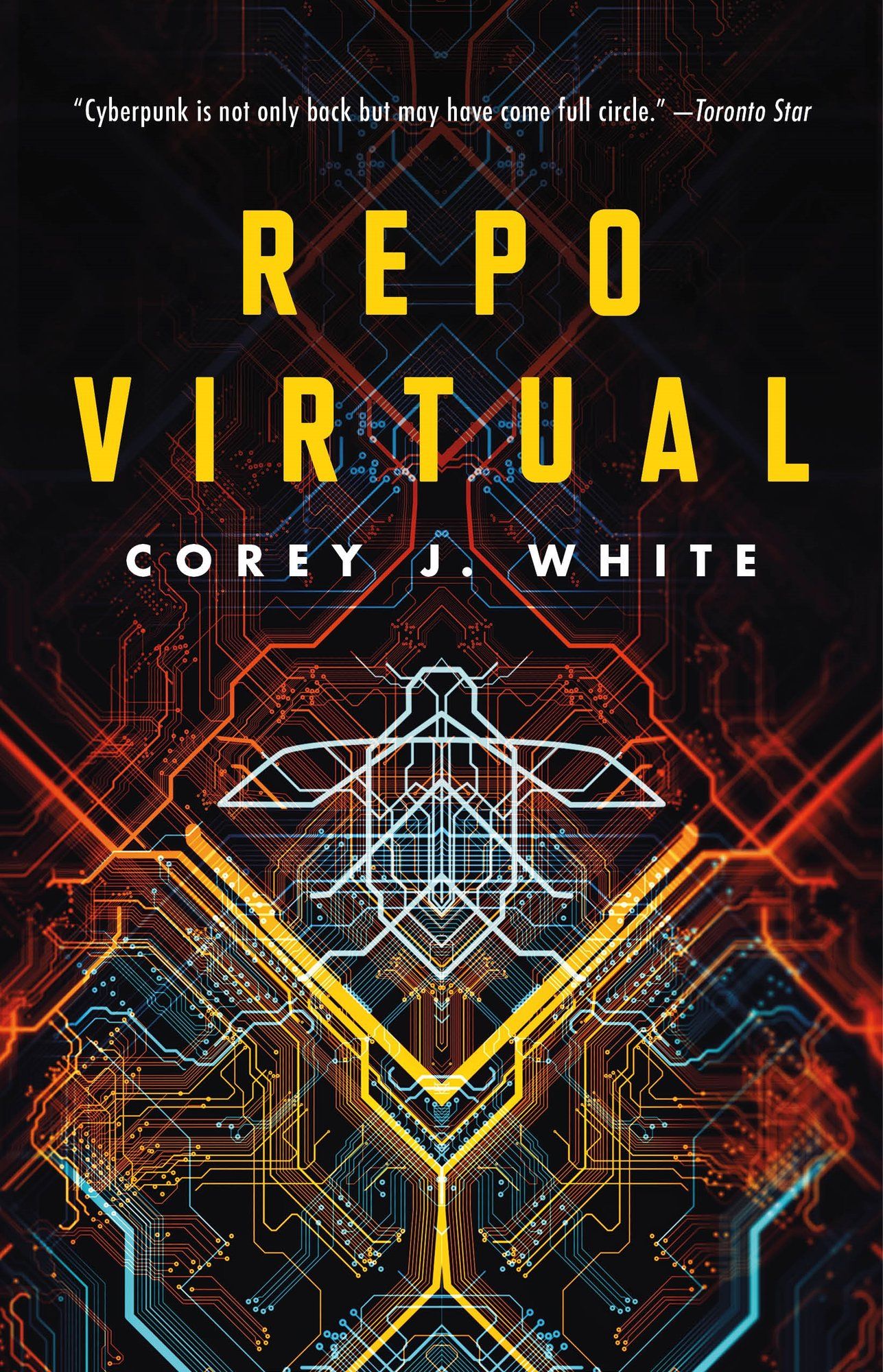
A cyberpunk novel in early 2020 was a rare thing. An excellent cyberpunk novel vanishingly so, and yet here we have Repo Virtual. An update in politics, tech, and aesthetics to the firmly 80s-rooted origins of the genre, it really is a hugely impressive piece of mid/near future science fiction. The augmented reality world of Neo Songdo is impressively built, the “heist gets complicated” plot well executed, and the action sequences are kinetic and exciting. The core cast is wonderfully drawn and very queer (gay, trans, and otherwise queer folks are the focus). If the take on AI has dated just a little in the depressing post ChatGPT world we live in right now, that’s only really a minor issue; AI in fiction is always as much about humanity’s relationship with itself as it is about any particular iteration of technology, and White has something interesting to say about humans.
The city of Neo Songdo is a Russian doll of realities – augmented and virtual spaces anchored in the weight of the real. The smart city is designed to be read by machine vision while people see only the augmented facade of the corporate ideal. At night the stars are obscured by an intergalactic virtual war being waged by millions of players, while on the streets below people are forced to beg, steal, and hustle to survive.
Enter Julius Dax, online repoman and real-life thief. He's been hired for a special job: stealing an unknown object from a reclusive tech billionaire. But when he finds out he's stolen the first sentient AI, his payday gets a lot more complicated.
Award nominations: Ditmar Award
Award wins: Aurealis Award
Spotlight (still not an award)
K. B. Wagers: A Pale Light in the Black (Harper Voyager)
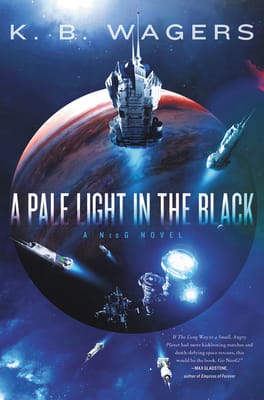
At its core a space opera, A Pale Light in the Black is also a somewhat implausible genre mashup that happily entirely works. Military SF, but the military in question is the space Coastguard. A sports novel, but the sports are futuristic quasi-military drills. A mystery novel but the mystery is about one of the key threads of worldbuilding. In less skilled hands, these elements could have been disparate and the novel a mess, but in Wagers’ hands, each thread supports each other into a hugely pleasing whole. They also have excellent command of pacing, with the action sequences being genuinely tense and the character moments given space and time to breathe. The book is also also quite deliberately queernorm, with the cast dominated by gay, bi, trans, ace, and polyam (and the intersections of the above) characters, and a society where this is largely a non-issue, without ever being made to feel like you’re in the middle of a super gay after school special.
This is the start of Wagers’ third excellent space opera series, and the fact that they haven’t had any award recognition for it is hard to fathom. I’m still not giving out awards here, but take this spotlight for one of Wagers’ very best as an indication that they very much deserve one.
Neo-G: Book 1
For the past year, their close loss in the annual Boarding Games has haunted Interceptor Team: Zuma’s Ghost. With this year’s competition looming, they’re looking forward to some payback—until an unexpected personnel change leaves them reeling. Their best swordsman has been transferred, and a new lieutenant has been assigned in his place.
Maxine Carmichael is trying to carve a place in the world on her own—away from the pressure and influence of her powerful family. The last thing she wants is to cause trouble at her command on Jupiter Station. With her new team in turmoil, Max must overcome her self-doubt and win their trust if she’s going to succeed. Failing is not an option—and would only prove her parents right.
But Max and the team must learn to work together quickly. A routine mission to retrieve a missing ship has suddenly turned dangerous, and now their lives are on the line. Someone is targeting members of Zuma’s Ghost, a mysterious opponent willing to kill to safeguard a secret that could shake society to its core... a secret that could lead to their deaths and kill thousands more unless Max and her new team stop them.
Rescue those in danger, find the bad guys, win the Games. It’s all in a day’s work at the NeoG.
Award nominations: None