- Borrowed and Blue
- Posts
- The Queersar not an award 2022
The Queersar not an award 2022
For excellence in queer SFF and SFF with queers released in 2022

Eddie
May 04, 2026
And so on to 2022! Consistent with the first two years in terms of quality, I think, but different in a number of respects as well. Fantasy-dominated (only two SF novels here). The first honour list with majority male and enby author representation. Nothing from the Tor juggernaut (and only three from big pub imprints), and nine different imprints represented here.
I’m pleased to see I’ve cast a wide net in constructing this honour list, but that fact does to some extent show the discoverability problem that exists in the modern genre space. There are more and more queer SFF books coming out, from more and more publishers, big and small (or self-pubbed, as one book here initially was). Not all have particularly large marketing budgets, and those that do haven’t necessarily, in my assessment, put the marketing push as firmly behind their queer titles as they do behind the no better but less queer titles they have to hawk. The commercial queer SFF blind spot I hypothesise exists in the genre award space isn’t limited to awards: I think publishers contribute, too.
So; to the extent my little exercise here can help you discover brilliant queer fiction that is harder for people who don’t obsessively trawl forthcoming release lists to find than it should be, I’m achieving what I want to. Have a look below; nine brilliant titles on the honour list, and what is quite literally my favourite novel of the past ten years in the spotlight. I hope you find something new.
Erratum: I messed up the release date of a book that very much deserves to be honoured; thought it was released in 2023, turns out it was released this year. That book is The Discord of Gods by Jenn Lyons, and you can read me singing its praises in my introduction to the 2023 list here.
Honour list
Aliette de Bodard: The Red Scholar's Wake (JAB Books)
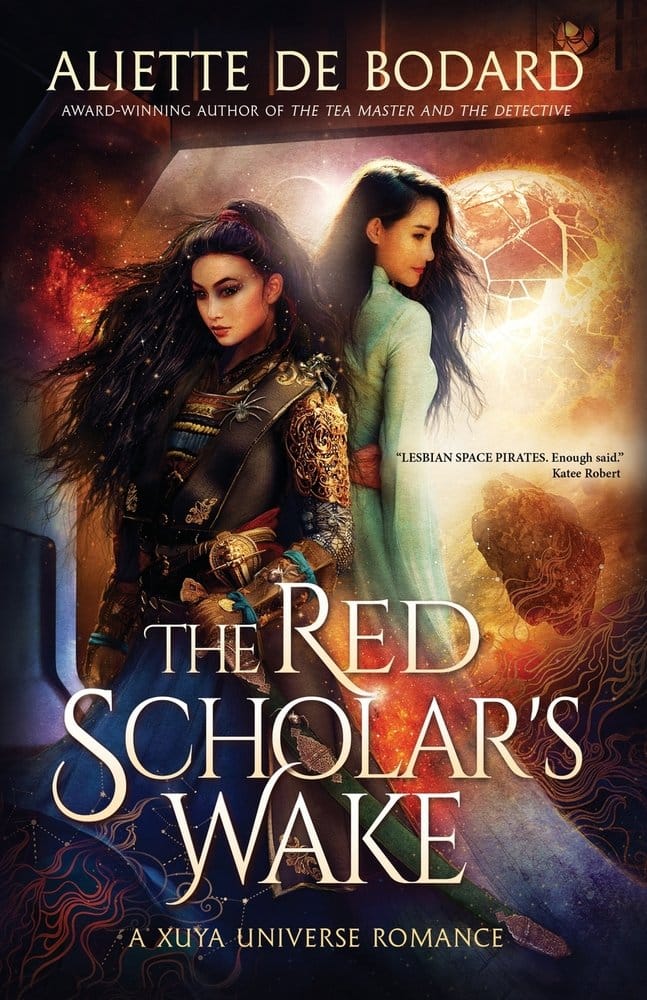
“Space Pirate Zheng Yi Sao” is a great premise. The 19th century ‘pirate queen’ married the leader of a major pirate fleet active in the South China Sea, led it herself for a number of years after his death, then managed to negotiate a retirement, dying peacefully decades later. De Bodard takes this premise and turns up the volume by making the pirate king a female sentient spaceship, setting up a marriage of convenience with the recently captured tech expert Xích Si. You will not be surprised that genuine feelings start to develop. The unconventional lesbian romance is fantastically done, and the space opera backdrop is (set in de Bodard’s ongoing Xuya universe) equally compelling. This is a book that will require just a little work for many readers – Xuya is a Vietnamese-derived culture and setting, and the linguistic and cultural assumptions are accordingly different and require adjustment – but this is a feature, not a bug. Fiction that both plays with familiar genre tropes and offers up something different is rarer than it should be, and The Red Scholar’s Wake happily does both superbly.
When tech scavenger Xích Si is captured and imprisoned by the infamous pirates of the Red Banner, she expects to be tortured or killed. Instead, their leader, Rice Fish, makes Xích Si an utterly incredible proposition: an offer of marriage.
Both have their reasons for this arrangement: Xích Si needs protection; Rice Fish, a sentient spaceship, needs a technical expert to investigate the death of her first wife, the Red Scholar. That's all there is to it.
But as the interstellar war against piracy rages on and their own investigation reaches a dire conclusion, the two of them discover that their arrangement has evolved into something much less business-focused and more personal...and tender. And maybe the best thing that's ever happened to either of them—but only if they can find a way to survive together.
Award nominations: Arthur C Clarke Award, BSFA Award, Locus Award
Maya Deane: Wrath Goddess Sing (William Morrow)
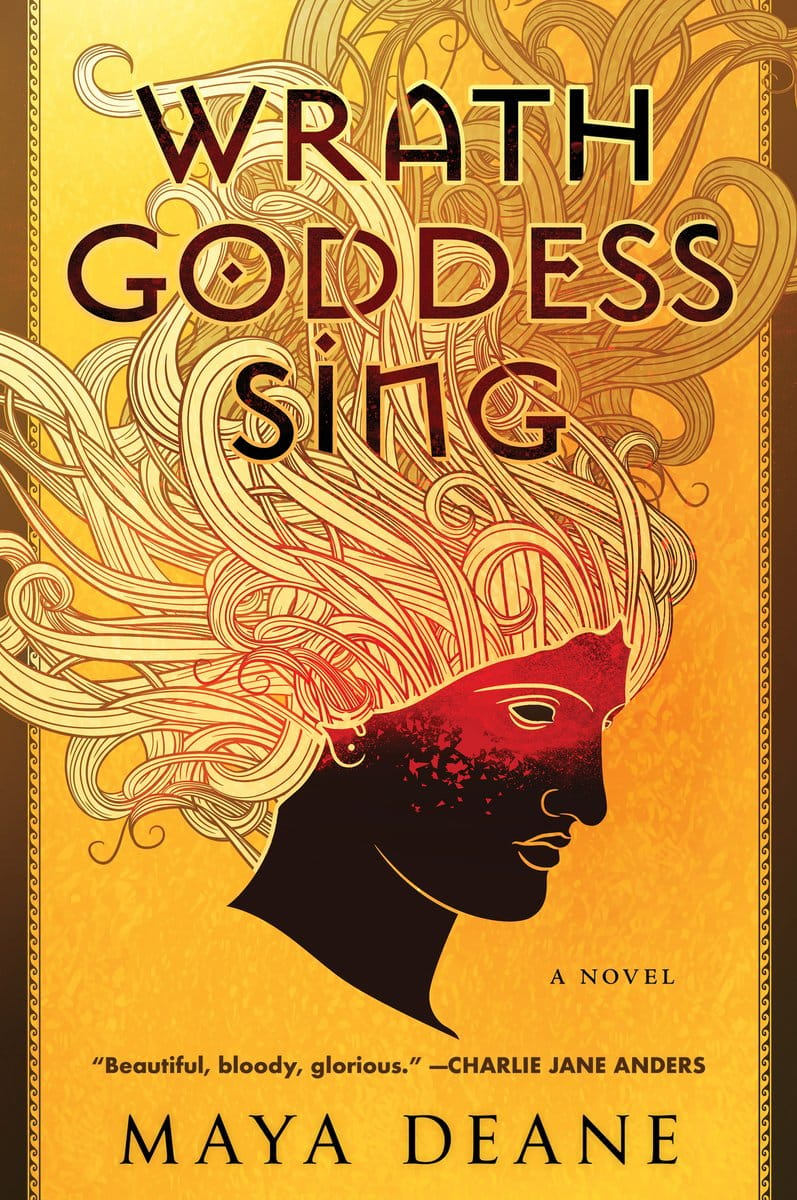
Another impeccable premise: what if Achilles was among the maidens of Skyros not to hide from danger but because she is a trans woman? What follows from this brilliant starting point is, in my view, best seen not as a close retelling of the Illiad but a bloody, gonzo Bronze Age fantasy inspired by it. The gods of the setting are monstrous, the societies unforgiving and harsh. The setting and cast are full of queerness, but this is about as far from The Song of Achilles as you can possibly get when drawing on the same source material (I get why the publisher used this as a comp but it gives one really quite the wrong idea of what to expect.
Wrath Goddess Sing is a book I didn’t get to on release; the only thing I registered in 2022 was what seemed at the time a pretty loud backlash to some elements of it. Having now read the book, it’s very clear to me that that backlash was yet another example of people on the internet being tiresomely unable to distinguish between depiction and endorsement and can be safely ignored. An astonishing, visceral howl of a book; I was completely blown away.
The gods wanted blood. She fought for love.
Achilles has fled her home and her vicious Myrmidon clan to live as a woman with the kallai, the transgender priestesses of Great Mother Aphrodite. When Odysseus comes to recruit the “prince” Achilles for a war against the Hittites, she prepares to die rather than fight as a man. However, her divine mother, Athena, intervenes, transforming her body into the woman’s body she always longed for, and promises her everything: glory, power, fame, victory in war, and, most importantly, a child born of her own body. Reunited with her beloved cousin, Patroklos, and his brilliant wife, the sorceress Meryapi, Achilles sets out to war with a vengeance.
But the gods—a dysfunctional family of abusive immortals that have glutted on human sacrifices for centuries—have woven ancient schemes more blood-soaked and nightmarish than Achilles can imagine. At the center of it all is the cruel, immortal Helen, who sees Achilles as a worthy enemy after millennia of ennui and emptiness. In love with her newfound nemesis, Helen sets out to destroy everything and everyone Achilles cherishes, seeking a battle to the death.
Award nominations: Crawford Award, Lambda Literary award (for transgender fiction rather than the Queer SFF category)
K D Edwards: The Hourglass Throne (Pyr)
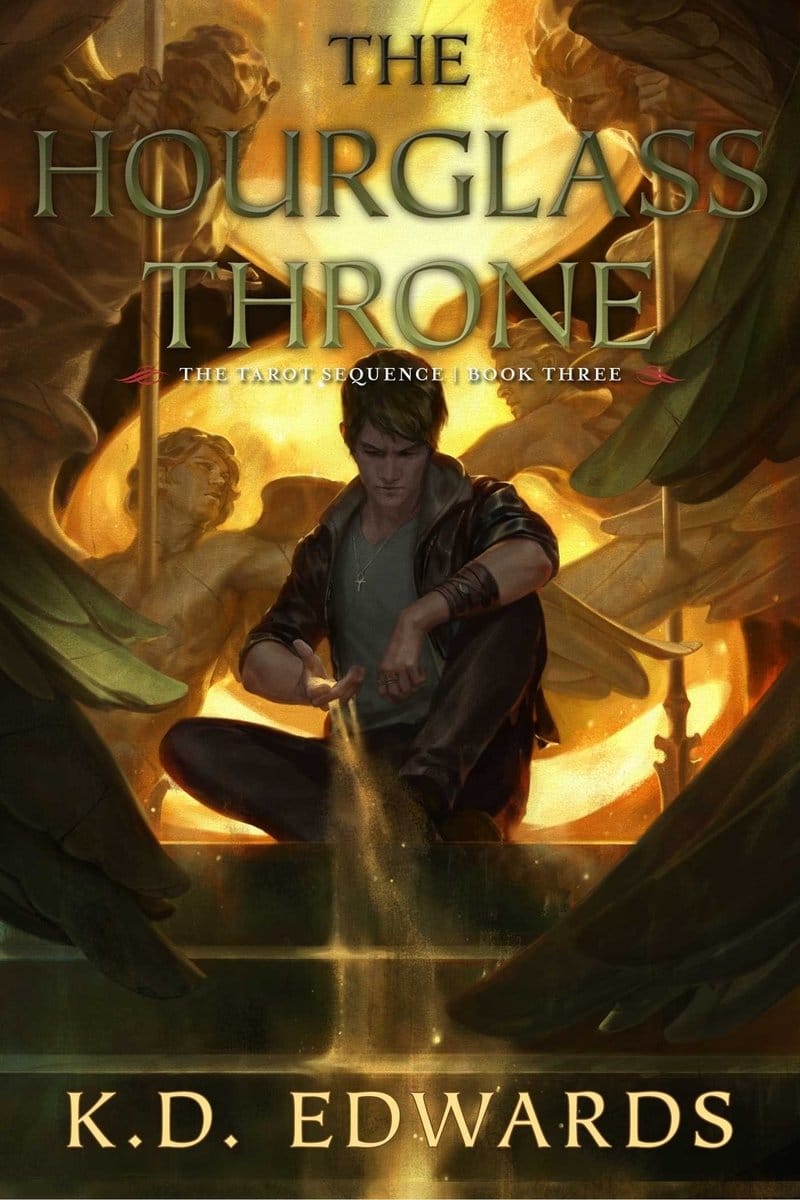
The short version of K D Edwards’ Tarot sequence is “what if Ilona Andrews but gay?”. Given that the Andrews duo is one of the finest 2000s exponents of urban fantasy, that’s a hell of a starting point. But there’s a lot more going on than that, too. The series started as very much being about gay and bi men, but by The Hourglass Throne, Edwards is serving up characters and worldbuilding far more broadly queered (to the benefit of the setting’s vibrancy and verisimilitude). It also gives us an extremely compelling combination of found family coziness and incredibly taut action sequences, all accented with a well-judged thread of horror. It’d be easy – but mistaken – to be distracted by just how much fun this all is from just how much skill it takes to pull off. Bluntly, in other hands, the whole setup could have fallen in a messy heap. It’s to Edwards’ enormous credit as a writer that it all feels integrated and deliberate. Some of the very best unashamedly commercial fiction going in the genre right now, The Hourglass Throne already has a devoted fanbase but deserves even more eyes.
The Tarot Sequence: Book 3
As Rune Saint John grapples with the challenges of assuming the Sun Throne, a powerful barrier appears around New Atlantis’s famed rejuvenation center. But who could have created such formidable magic . . . what do they want from the immortality clinic . . . and what remains of the dozens trapped inside?
Though Rune and his lifelong bodyguard Brand are tasked with investigating the mysterious barrier, Rune is also busy settling into his new life at court. Claiming his father’s throne has irrevocably thrown him into the precarious world of political deception, and he must secure relationships with newfound allies in time to keep his growing found family safe. His relationship with his lover, Addam Saint Nicholas, raises additional political complications they must navigate. But he and Brand soon discover that the power behind the barrier holds a much more insidious, far-reaching threat to his family, to his people, and to the world.
Now, the rulers of New Atlantis must confront an enemy both new and ancient as the flow of time itself is drawn into the conflict. And as Rune finds himself inexorably drawn back to the fall of his father’s court and his own torture at the hands of masked conspirators, the secrets that he has long guarded will be dragged into the light—changing the Sun Throne, and New Atlantis, forever.
Award nominations: None.
Davinia Evans: Notorious Sorcerer (Orbit)
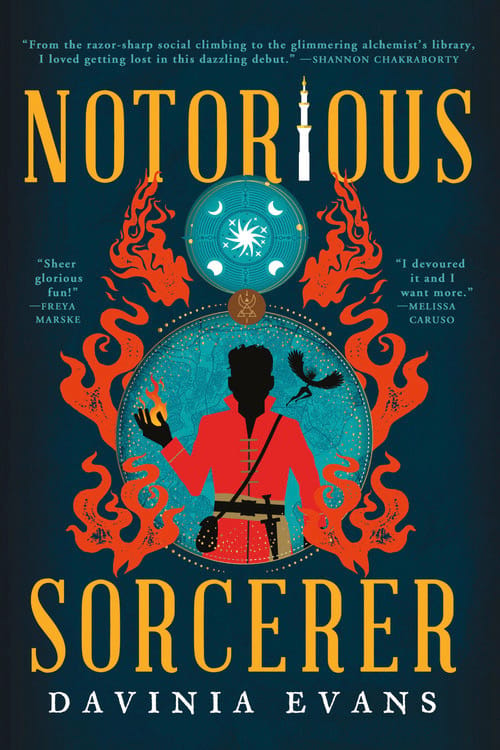
I’m a sucker for a really well-crafted secondary world city, and Bezim is a great secondary world city. The blurb only mentions Siyon, but we have three point of view characters and each of them gives us different perspective on this well-crafted, unusually magical metropolis. Siyon is, as the blurb says, a lower class alchemist scrabbling at the lower rungs of magic in the city. Zagiri is an upper class girl playing (rather successfully) at swordfighting with the same crowd of street gangs Siyon is associated with. Anahid, Zagiri’s older sister, tries to hold the family prospects together and carve out a space for herself. All are compelling, though Anahid is low key my favourite as the most seemingly straight-backed establishment character finding more and more cracks in her facade. There are also a couple of queer romance-adjacent plotlines, and queerness is generally baked into the worldbuilding.
This is a book one – the already impressive world is expanded and deepened in subsequent books – but it’s a really good book one. It doesn’t just set the scene, it’s not just the first third of a long novel chopped into bits for publication, it also has major points of action and a complete and coherent plot arc in its own right. And given that it’s the start of one of my favourite fantasy trilogies of the past few years, the fact that once you’ve read this there’s two more to come is way more of a feature than a bug.
The Burnished City: Book 1
Welcome to Bezim, where sword-slinging bravi race through the night, and where rich and idle alchemists make magic out of mixing and measuring the four planes of reality.
Siyon Velo, Dockside brat turned petty alchemist, scrapes a living hopping between the planes to harvest ingredients for the city's alchemists. But when Siyon accidentally commits an act of impossible magic, he's catapulted into the limelight--which is a bad place to be when the planes start lurching out of alignment, threatening to send the city into the sea.
It will take a miracle to save Bezim. Good thing Siyon has pulled off the impossible before. Now he just has to master it.
Award nominations: None.
A J Lancaster: A Rake of His Own (Self-published; Tor UK trad pub edition forthcoming)
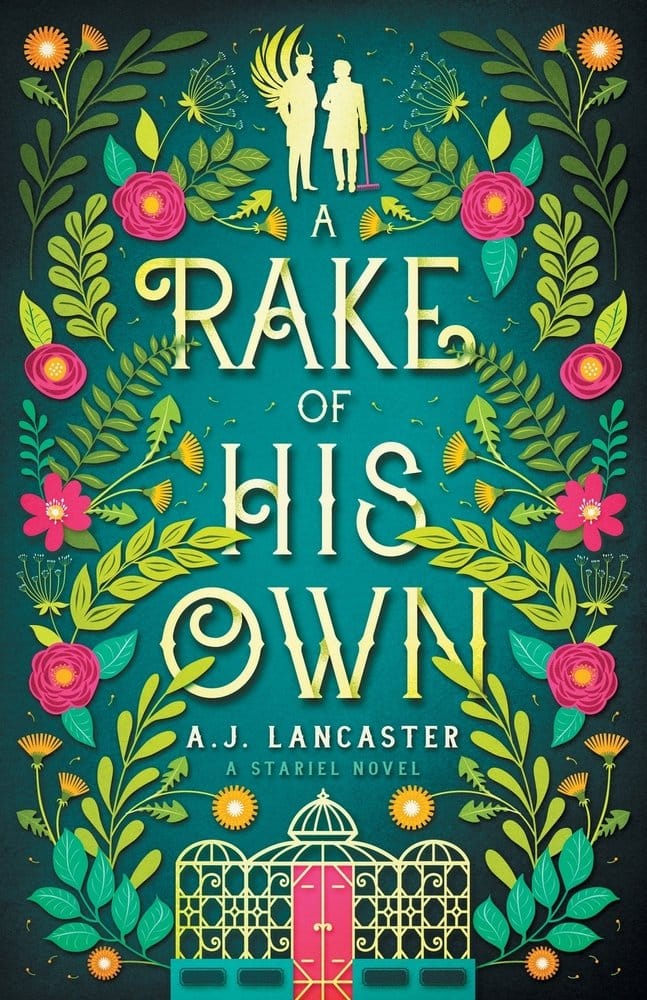
The thing about bad boy romances is that the author has to put across why this obvious bad idea is attractive enough to make a mistake with and do enough character development to keep that edge while also making a long-term relationship with them plausibly not a mistake by the end of the book. A Rake of His Own pulls off both of these with élan. Our love interest in this book, fae prince Rakken, is in all respects a mistake and yet he’s a mistake anyone into men would absolutely make. And his development into a reasonable prospect for a romantic partner is also done extremely well. The other half of our lead due, Marius, is also appealingly drawn; shy nerd with a backbone of steel is also a good look. Lancaster continues her excellent fantasy of manners work on from the main Stariel series with well-crafted prose and a light touch of humour. The mystery plot that runs in parallel to the romantic one also helps keep things moving well without the descent into navel-gazing and/or forced misunderstanding that straight up romance often leans on. A hugely enjoyable read, and I understand why it (and the other four Stariel books) have recently been picked up for a tradpub deal.
Stariel: Book 4.5 (A spinoff from the main Stariel series, can be read about 80/90% standalone)
Marius Valstar doesn't know which is worse: the dead body in his greenhouse or the naked fae prince on his desk.
The only rakes of interest to Marius are garden tools. Not fae princes. Certainly not the arrogant, selfish fae prince he has the misfortune to have a history with.
But when Prince Rakken turns up naked and bleeding in Marius's college the same day a body appears in his greenhouse, scruples must take second place to solving a murder that could unravel the delicate balance between humans and fae.
Marius's own developing magical powers are more hindrance than help - as is Rakken's bloodied past. Forced to work together, they must forge an uneasy alliance if they are to track down the killer. But how can Marius trust the man who represents everything he's trying to avoid?
Award wins: Sir Julius Vogel Award.
R B Lemberg: The Unbalancing (Tachyon Publications)
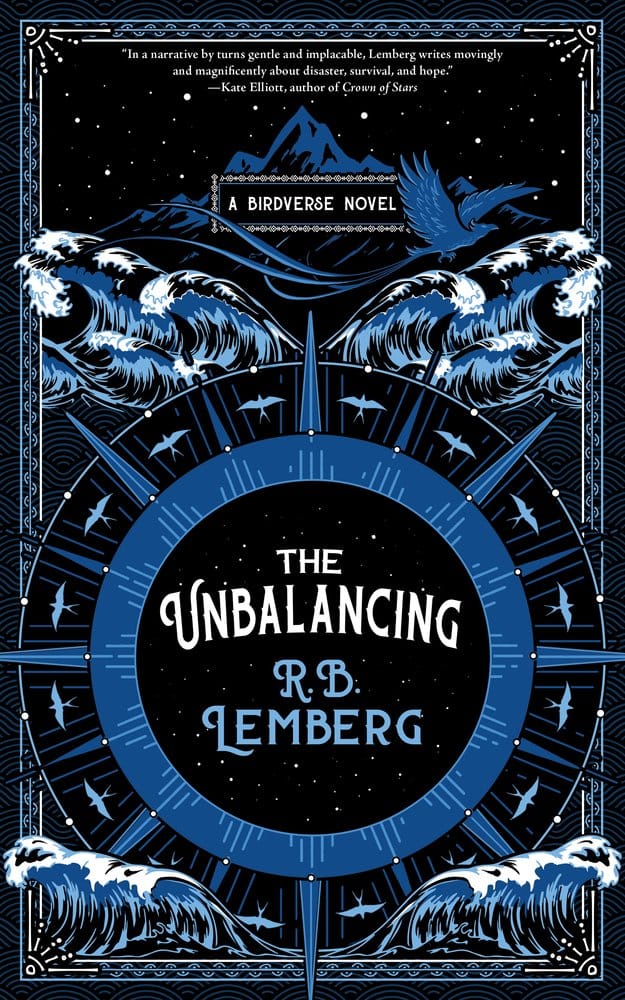
It’s astonishing – and a testament to their skill as a writer – how much Lemberg fits into this short novel without it ever feeling cramped. The Unbalancing contains a looming disaster, a creation myth becoming startlingly real, a surprisingly sweet romance, and subtle, vivid character and setting work. The diversity and queerness of the setting is pervasive in a way that feels entirely intentional and never shoehorned; the internal logic of the Birdverse (the setting for much of Lemberg’s fiction) both demands and explains it. All of this is rendered in some of the absolute best prose on offer in the genre. A great place to start your journey into the Birdverse; I’m pretty confident it won’t be where you stop.
Beneath the waters by the islands of Gelle-Geu, a star sleeps restlessly. The celebrated new starkeeper Ranra Kekeri, who is preoccupied by the increasing tremors, confronts the problems left behind by her predecessor.
Meanwhile, the poet Erígra Lilún, who merely wants to be left alone, is repeatedly asked by their ancestor Semberí to take over the starkeeping helm. Semberí insists upon telling Lilún mysterious tales of the deliverance of the stars by the goddess Bird.
When Ranra and Lilún meet, sparks begin to fly. An unforeseen configuration of their magical deepnames illuminates the trouble under the tides. For Ranra and Lilún, their story is just beginning; for the people of Gelle-Geu, it may well be too late to save their home.
Award nominations: Locus Award
Victor Manibo: The Sleepless (Erewhon Books)
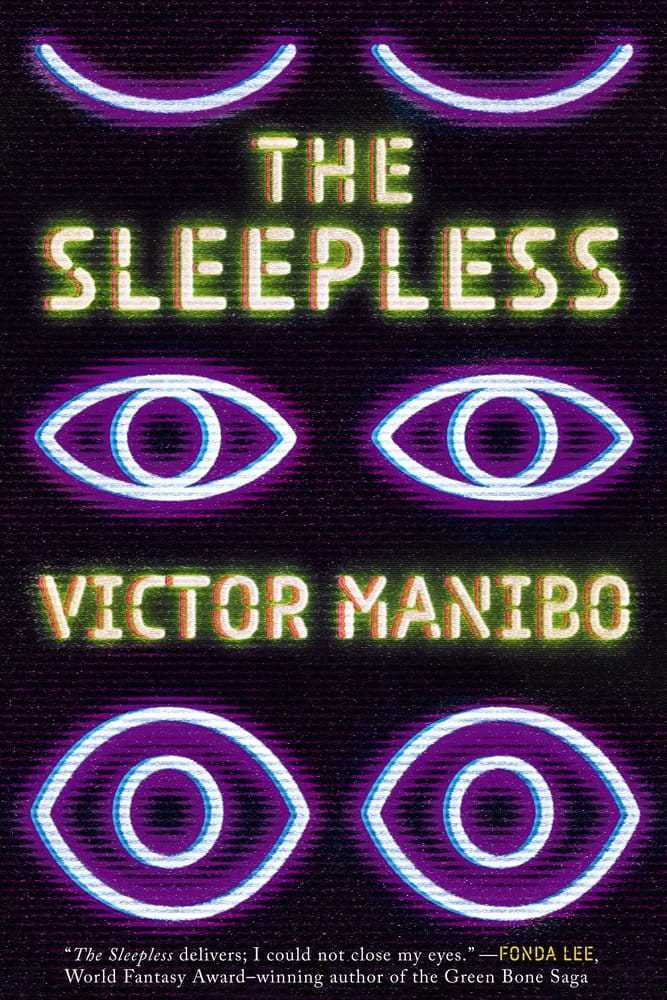
Taut Blake Crouch-esque SF thriller with a queer Filipino man in the lead role. The SFnal premise here – that for some reason a significant portion of the world has stopped sleeping – is great, and Manibo takes it and runs with it to do a whole heap of really interesting social speculation. The themes of exploitation and the contempt of capital for labour his even harder with the rapid rise of AI and the executive class’s response to it in the years since the book’s release. The character work is well-observed (very much not a given for a thriller), the plotting incredibly tight, and the legible fury at the contemporary approach to work well-earned. A hell of a debut (and one, I might add, Manibo has lived up to in his subsequent work).
In a hyper-capitalist near future, a grieving journalist investigates his mentor’s death—while grappling with unintended consequences of biohacking that just might implicate him in it.
A mysterious pandemic causes a quarter of the world to permanently lose the ability to sleep—without any apparent health implications. The outbreak creates a new class of people who are both feared and ostracized, most of whom optimize their extra hours to earn more money.
Journalist Jamie Vega is Sleepless: he can’t sleep, nor does he need to. When his boss dies on the eve of a controversial corporate takeover, Jamie doesn’t buy the too-convenient explanation of suicide, and launches an investigation of his own.
But everything goes awry when Jamie discovers that he was the last person who saw Simon alive. Not only do the police suspect him, Jamie himself has no memory of that night. Alarmingly, his memory loss may have to do with how he became Sleepless: not naturally, like other Sleepless people, but through a risky and illegal biohacking process.
As Jamie delves deeper into Simon’s final days, he tangles with extremist organizations and powerful corporate interests, all while confronting past traumas and unforeseen consequences of his medical experimentation. But Jamie soon faces the most dangerous decision of all as he uncovers a terrifying truth about Sleeplessness that imperils him—and all of humanity.
Award nominations: None.
Elijah Kinch Spector: Kalyna the Soothsayer (Erewhon Books)
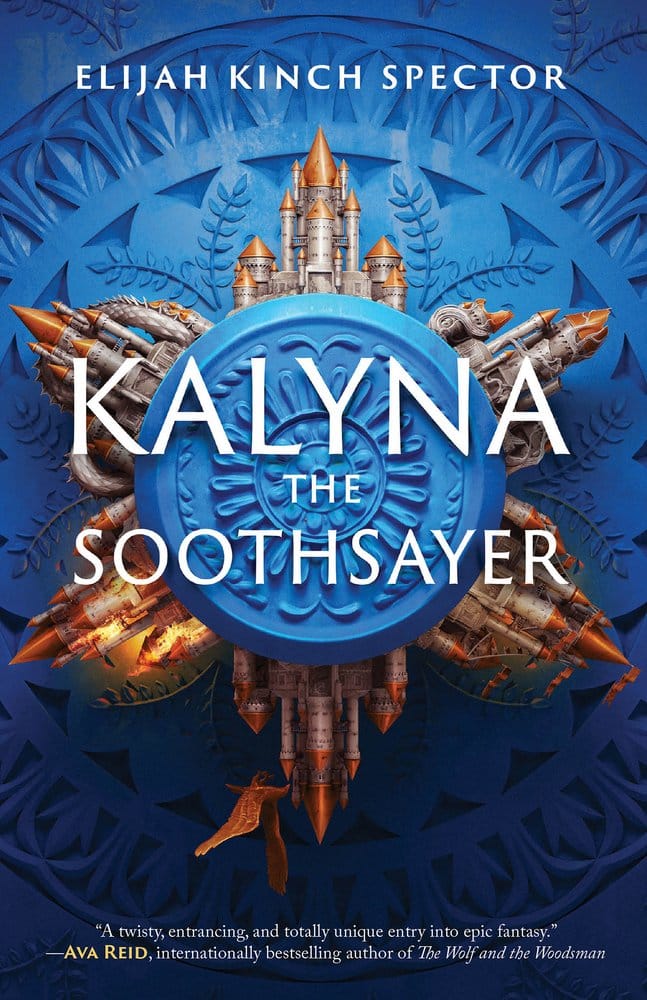
After being deployed to great success for a good decade or so, in the 2020s snark has started to get a bad name. After years of post Buffy Whedonesque quipathons (not to mention the also Whedon-influenced MCU), general opinion has started to turn against this sort of storytelling as an inescapable emotional barrier between an author and their audience. And there is much to that critique, but I do feel like it has gone too far the other way. Snark can be deployed as a barrier, but it can also, with a first person narrator, be deployed by the author to make it very obvious that their narrator is using it to paper over the cracks of an extremely imminent breakdown. The two best recent examples of this technique, in my view, are Gideon the Ninth and… Kalyna the Soothsayer.
If you take a superficial read of either of these books, you can see a slightly wacky fantasy bordering on comedy, but I think that’s a mistake. Kalyna is the story of an isolated person in an isolated family absolutely white-knuckling survival and desperately hoping no one else notices. And if you see the book that way I think it’s spectacularly good. Tightly plotted, skilfully written, with a bisexual lead and other queer supporting characters, it’s both enormously entertaining and, I think, has something real to say. Pick it up, read it; the sequel (not narrated by Kalyna) is just as good, and I really hope we get more.
Failures of the Four Kingdoms: Book 1
A plucky, sardonic con artist must “prophesize” her way out of peril— discovering along the way that the keys to power and politics are nothing more than the stories that we can sell as truth.
Kalyna’s family has the Gift: the ability to see the future. For generations, they traveled the four kingdoms of the Tetrarchia selling their services as soothsayers. Every child of their family is born with this Gift—everyone except Kalyna.
So far, Kalyna has used informants and trickery to falsify prophecies for coin, scrounging together a living for her deteriorating father and cruel grandmother. But Kalyna’s reputation for prophecy precedes her, and poverty turns to danger when she is pressed into service by the spymaster to Rotfelsen.
Kalyna is to use her “Gift” to uncover threats against Rotfelsen’s king, her family held hostage to ensure her good behavior. But politics are devious; the king’s enemies abound, and Kalyna’s skills for investigation and deception are tested to the limit. Worse, the conspiracy she uncovers points to a larger threat, not only to Rotfelsen but to the Tetrarchia itself.
Kalyna is determined to protect her family and newfound friends, but as she is drawn deeper into palace intrigue, she can no longer tell if her manipulations are helping prevent the Tetrarchia’s destruction—or if her lies will bring about its prophesized downfall.
Award nominations: British Fantasy Award (Sydney J. Bounds Award for Best Newcomer)
A M Tuomala: The Map and the Territory (Candlemark & Gleam)
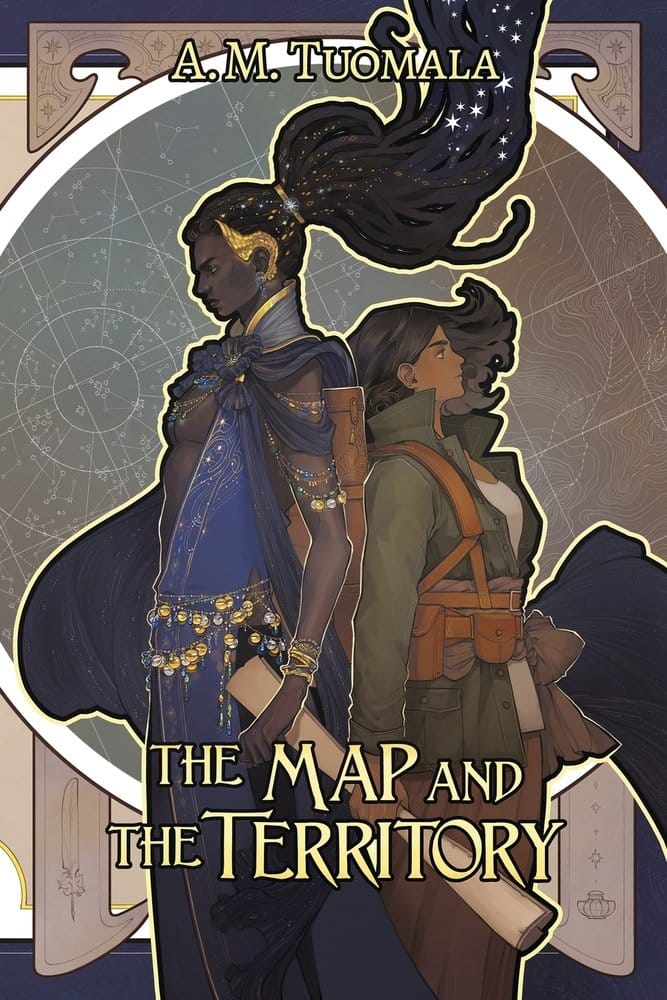
Post-apocalyptic road trip fantasy of a most unusual sort. The apocalypse is magical rather than SFnal, and only just post; the apocalypse occurs in the book’s first chapters, and the rest is our cast dealing with its immediate fallout. This is the story of a society grappling with sudden change, not that which has adapted to it. The main pair of characters are also (unfortunately) rarities in fantasy casting: a fabulous, extremely horny gay wizard rendered without judgment and a caring, loving aroace (also WAY rarer than it should be) cartographer; Queernorm done well. The odd, altered fantasy landscape is evocatively described, and the action engaging without being rushed. A hugely enjoyable book which deserves much, much more attention than it got.
When the sky breaks apart and an earthquake shatters the seaside city of Sharis, cartographer Rukha Masreen is far from home. Caught in the city's ruins with only her tools and her wits, she meets a traveling companion who will change her course forever: the wizard Eshu, who stumbles out of a mirror with hungry ghosts on his heels.
He's everything that raises her hackles: high-strung, grandiloquent, stubborn as iron. But he needs to get home, too, and she doesn't want him to have to make the journey alone.
As they cross the continent together, though, Rukha and Eshu soon realize that the disaster that's befallen their world is much larger than they could have imagined. The once-vibrant pathways of the Mirrorlands are deserted. Entire cities lie entombed in crystal. And to make matters worse, a wild god is hunting them down. The further they travel from familiar territory, the more their fragile new friendship cracks under the strain.
To survive the end of their world, Rukha and Eshu will need more than magic and science-they'll need each other.
Award nominations: None
Spotlight
Simon Jimenez: The Spear Cuts Through Water (Del Rey)
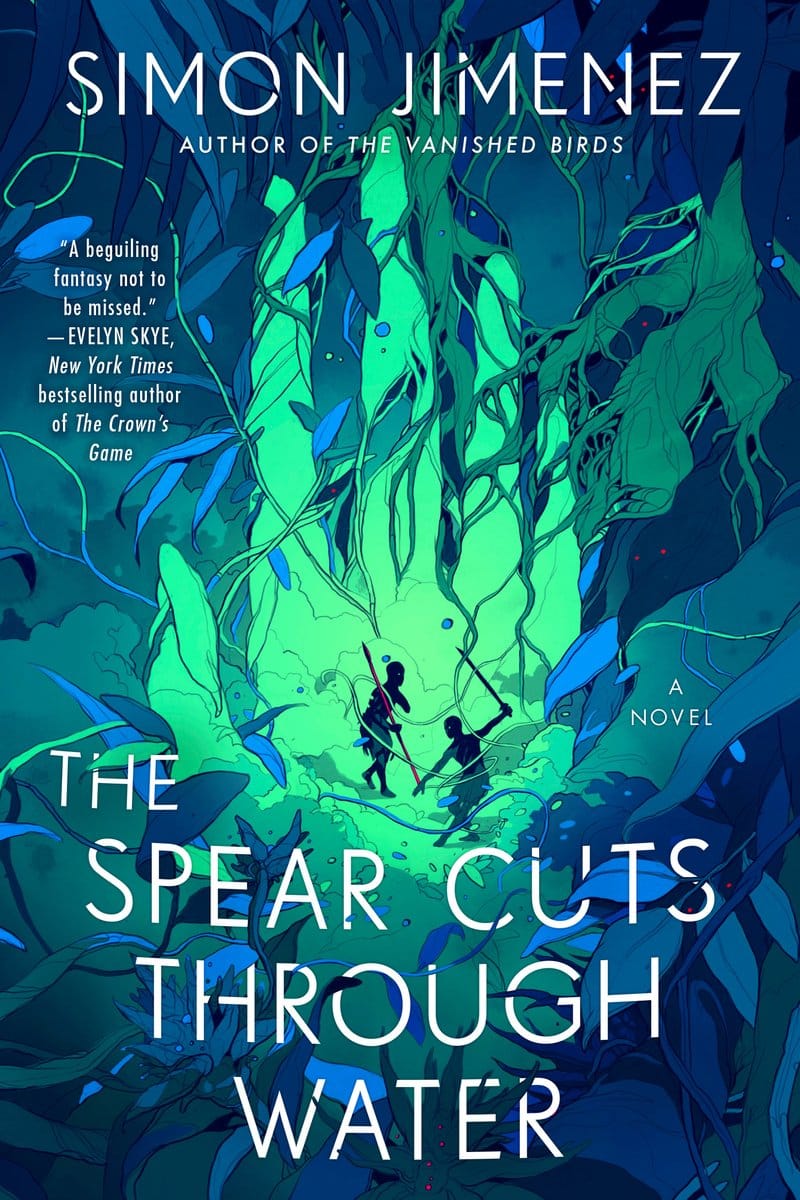
The dedication of The Spear Cuts Through Water reads: “this one’s for me.” This explains, I think, both the astonishing quality of the novel and why its following remains merely a (largish) cult one, despite it being the best novel I’ve read in the last decade.
The Spear Cuts Through Water is a reasonably standard mythic quest in its plot – take the McGuffin from point A to point B – everything else building from that foundation is wildly outside the fantasy norm; Jimenez is clearly having fun and it is spectacular. There are games with a frame narrative bleeding into the main story. There is – entirely legible and effective – switching between first, second, and third person narrative voices. There is gorgeous, poetic prose set against quite visceral horror-tinged atrocity. The whole thing is, when it comes down to it, the transcription of a dance performance held in a collective dream theatre of the minds of the descendants of the story’s characters. It is, as Abigail Nussbaum puts it, “...a story about performance, and what the novel is trying to evoke in the reader is the feeling of being in the audience. Part of a crowd but fundamentally alone, witnessing the same thing as everyone else, but bringing to it your own history, and your own familiarity with the tale.”
In the midst of all these literary pyrotechnics, this is also “a love story to its blade-dented bone,” and that love story is between two men. I was struck at how interested Jimenez is in how societies ask men to perform masculinity, what is made easy and what is made difficult, and the barriers put up by ourselves and others to caring and vulnerability. This is, in short, a book by a queer man for other queer men. That doesn’t mean you need to be a queer man to enjoy it (I certainly don’t think you do), but Jimenez is writing for himself and people like him, and the book concedes very little to anyone unwilling to meet the book on its own terms. That also goes for the astonishing literary skill on display; go looking for pretension and you’ll surely find it, but I think that’s to mistake what the book is doing. It is an almost absurdly ambitious novel that improbably pulls of pretty much everything it sets out to do. I was moved and changed by this book in a way that I am by few novels, and its comparative lack of award attention was one of the things that motivated me to do this whole exercise (and to leap at the chance to serve on the Crawford jury, one of the few awards to get it). A triumph.
The people suffer under the centuries-long rule of the Moon Throne. The royal family—the despotic emperor and his monstrous sons, the Three Terrors—hold the countryside in their choking grip. They bleed the land and oppress the citizens with the frightful powers they inherited from the god locked under their palace.
But that god cannot be contained forever.
With the aid of Jun, a guard broken by his guilt-stricken past, and Keema, an outcast fighting for his future, the god escapes from her royal captivity and flees from her own children, the triplet Terrors who would drag her back to her unholy prison. And so it is that she embarks with her young companions on a five-day pilgrimage in search of freedom—and a way to end the Moon Throne forever. The journey ahead will be more dangerous than any of them could have imagined.
Both a sweeping adventure story and an intimate exploration of identity, legacy, and belonging, The Spear Cuts Through Water is an ambitious and profound saga that will transport and transform you—and is like nothing you’ve ever read before.
Award nominations: Ignyte Award, Le Guin Prize.
Award wins: British Fantasy Awards (Robert Holdstock Award for Best Novel), Crawford Award.