- Borrowed and Blue
- Posts
- The Queersar Not An Award 2021
The Queersar Not An Award 2021
For excellence in queer SFF and SFF with queers released in 2021

Eddie
April 04, 2026

And so to the second year of the exercise! Compared to the 2020 list, a couple more with at least some significant award attention and, happily, representation from four different independent publishers (Blackstone, Candlemark & Gleam, Elsewhen Press, and Stelliform Press). If Tor and its sister imprint Tordotcom are heavily represented, well, that really does seem to be the state of the genre.
A wider range of aesthetics in this list than 2021’s as well, I think. The general idea that the focus would be on well-produced commercial SFF highlighting queerness is still there - only a couple on here I’d put firmly towards the literary end of the genre - but in terms of setting, approach, and themes the net is cast wide. I see this as a good thing; at 2021 we’re at the start of a period where queer (particularly sapphic) romantasy absolutely dominated the output of queer SFF from major publishers, and I hope my selection here is an indication that while that is great (there are a couple of books with crucial romantic plots in here), that is not the be all and end all of queer experience either now or in our imagined futures and secondary worlds.
Again we have one entry for the Hall of Already Famous - Arkady Martine’s masterful A Desolation Called Peace - nine on the honour list, and a particular spotlight to shine on one book. Dive in, I hope you find something new; it was another great year in the queer SFF space.
Hall of Already Famous
Arkady Martine: A Desolation Called Peace (Tor)
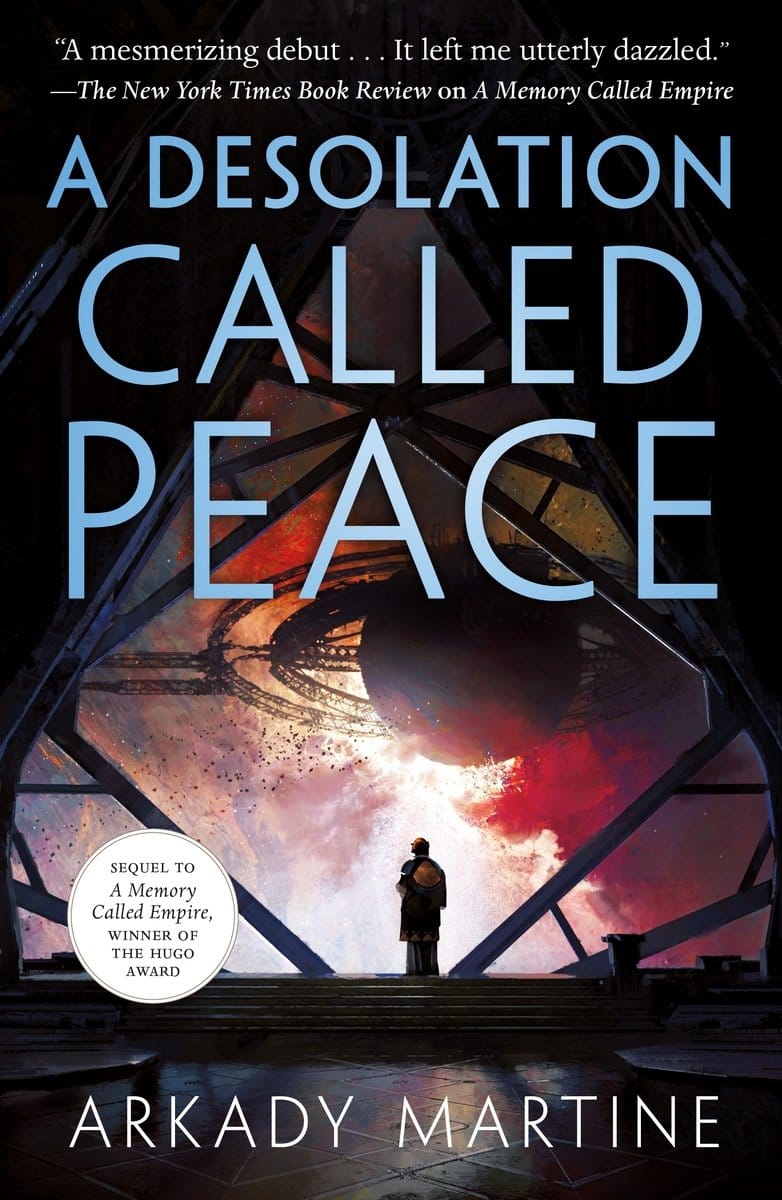
A Desolation Called Peace is the spectacular space opera sequel to Arkady Martine's genre-reinventing, Hugo Award-winning debut, A Memory Called Empire.
An alien armada lurks on the edges of Teixcalaanli space. No one can communicate with it, no one can destroy it, and Fleet Captain Nine Hibiscus is running out of options.
In a desperate attempt at diplomacy with the mysterious invaders, the fleet captain has sent for a diplomatic envoy. Now Mahit Dzmare and Three Seagrass—still reeling from the recent upheaval in the Empire—face the impossible task of trying to communicate with a hostile entity.
Their failure will guarantee millions of deaths in an endless war. Their success might prevent Teixcalaan’s destruction—and allow the empire to continue its rapacious expansion.
Or it might create something far stranger...
Award Nominations: Nebula Award; Lambda Award; Clarke Award; BSFA Award; Dragon Award; Goodreads Choice for Science Fiction.
Award Wins: Hugo Award; Locus Award.
Honour List
Katherine Addison: The Witness for the Dead (Tor)
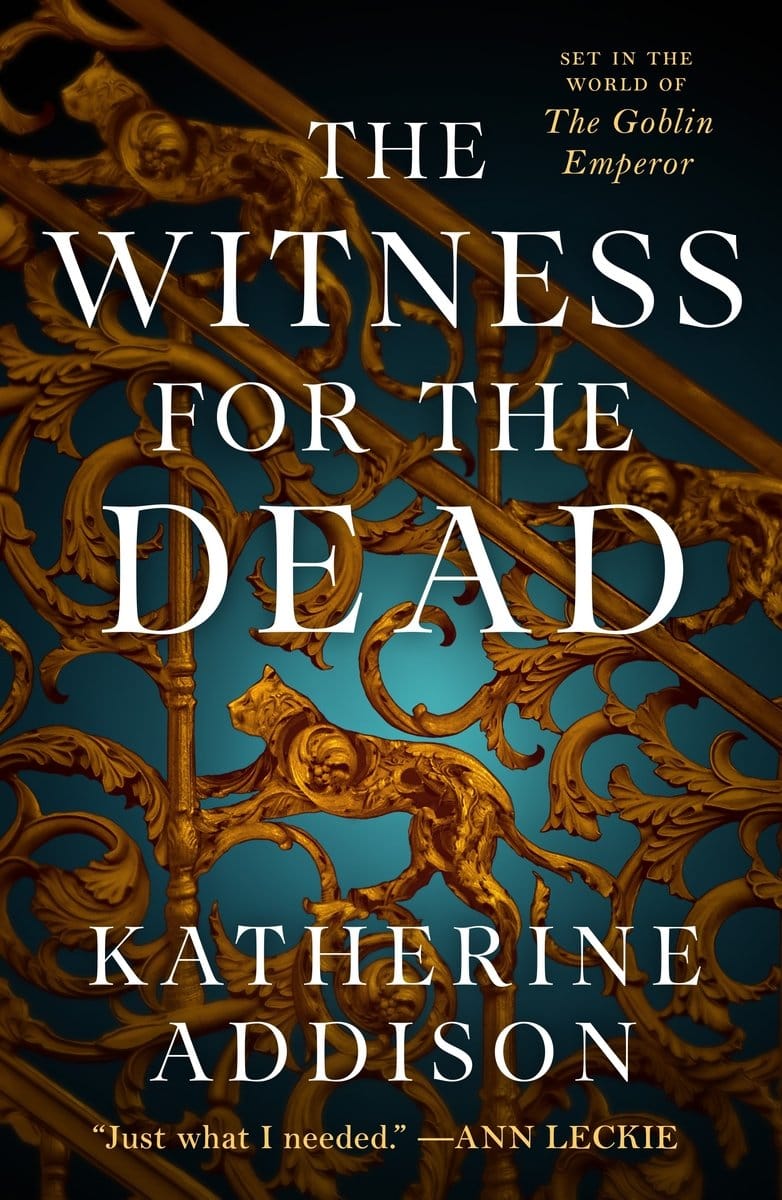
The start of a series that is spun off from Addison’s well-loved The Goblin Emperor, though in truth in 99% stands alone. What the book does so well is encapsulated in Celehar and the life he is deposited into after the end of The Goblin Emperor. A (sometime investigative) necromancer, Celehar is a sad, traumatised gay man; fair to say a total sad-sack. And this is a tough thing to pull off engagingly in fiction – an emotionally anaesthetised character can make for emotionally anaesthetised fiction – but Addison does so entirely. Yes, he is reasonably miserable, but Celehar is also kind to everyone who isn’t himself, committed to his duty to serve the people, and the bonds he makes with those people cause him, ever so slowly, to open up his life. The world of business and bureaucracy and arts the story takes place in is also, to me, considerably more interesting than palace intrigue, and the fantasy mystery plot drives everything forward effectively. A true triumph and, implausibly, arguably even better than its parent book.
Cemeteries of Amalo: Book 1
When the young half-goblin emperor Maia sought to learn who had set the bombs that killed his father and half-brothers, he turned to an obscure resident of his father’s Court, a Prelate of Ulis and a Witness for the Dead. Thara Celehar found the truth, though it did him no good to discover it. He lost his place as a retainer of his cousin the former Empress, and made far too many enemies among the many factions vying for power in the new Court. The favor of the Emperor is a dangerous coin.
Now Celehar lives in the city of Amalo, far from the Court though not exactly in exile. He has not escaped from politics, but his position gives him the ability to serve the common people of the city, which is his preference. He lives modestly, but his decency and fundamental honesty will not permit him to live quietly. As a Witness for the Dead, he can, sometimes, speak to the recently dead: see the last thing they saw, know the last thought they had, experience the last thing they felt. It is his duty use that ability to resolve disputes, to ascertain the intent of the dead, to find the killers of the murdered.
Celehar’s skills now lead him out of the quiet and into a morass of treachery, murder, and injustice. No matter his own background with the imperial house, Celehar will stand with the commoners, and possibly find a light in the darkness.
Award nominations: Locus Award; Mythopoeic Award.
Mike Brooks: The Black Coast (Orbit)
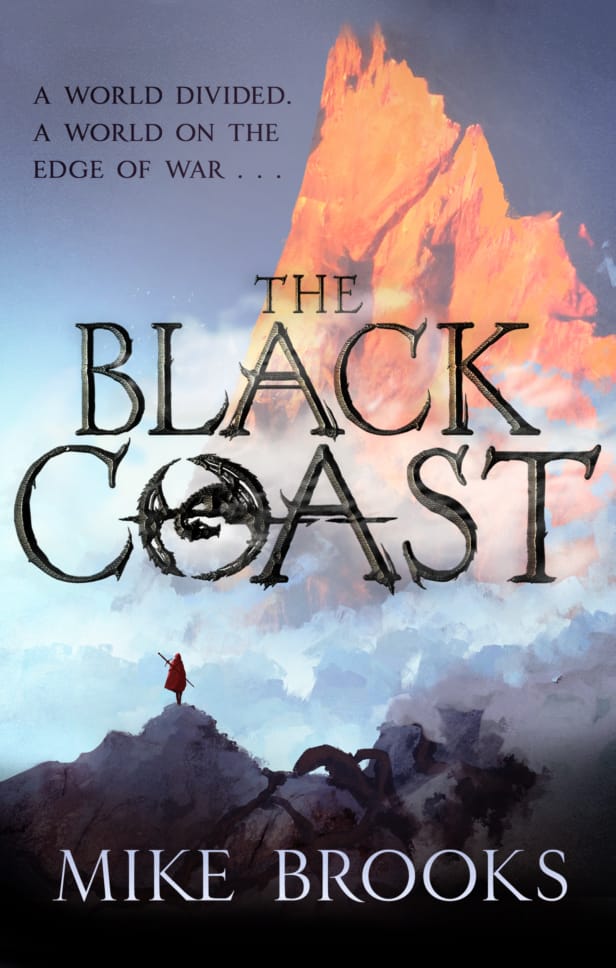
The acknowledgements of this book make Brooks’ motivation in writing it crystal clear: it is a howl of rage against the self-vandalism of Brexit and TERF Island-era Britain. It entirely delivers on this intent, though with inventiveness and empathy rather than ever mirroring such ignorant vindictiveness. In its structure and broad narrative approach, The Black Coast is a very well executed, reasonably traditional epic fantasy: battles, dragons, court machinations, hints of a secret society keeping watch on things, etc. But the world, plot, and character built from that structure is very modern. Well-considered speculation about gender, sexuality, pronouns, language and the way all of these affect culture. The revolutionary idea that a way to deal with desperate refugees arriving on your doorstep is to see if you have interests in common and work with them. This isn’t utopianism; the very different cultures clash, not everyone on either side is on the same page, and violence occasionally flares. But it admits a possibility that a lot of other fantasy – and a depressing number of countries in the real work – won’t. Rage, hope, hugely entertaining epic fantasy, and a boatload of queers. What else could you ask for?
The God-King Chronicles: Book 1
War Dragons. Fearsome Raiders. A Daemonic Warlord on the Rise.
When the citizens of Black Keep see ships on the horizon, terror takes them because they know who is coming: for generations, the keep has been raided by the fearsome clanspeople of Tjakorsha. Saddling their war dragons, Black Keep's warriors rush to defend their home only to discover that the clanspeople have not come to pillage at all. Driven from their own land by a daemonic despot who prophesises the end of the world, the raiders come in search of a new home...
Meanwhile the wider continent of Narida is lurching toward war. Black Keep is about to be caught in the crossfire – if only its new mismatched society can survive.
Award nominations: British Fantasy Award
Juliet Kemp: The Rising Flood (Elsewhen Press)
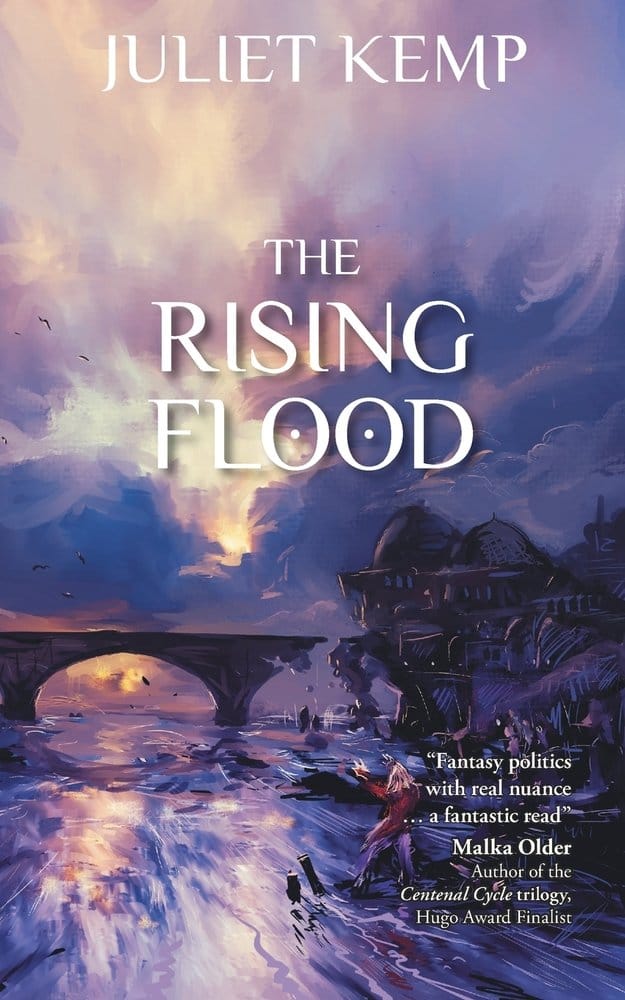
One of my favourite corners of fantasy is secondary world fantasy set primarily in meticulously realised cities that don’t exist but, by the time you’ve finished reading, feel like they should (one might call this urban fantasy, but the term’s already been claimed for something else). I’m thinking things like Leiber’s Lankhmar, Harrison’s Viriconium, Kushner’s Riverside, and Scott and Barnett’s Astreiant. There has, sadly, been very little of this sort of thing in recent years; Kemp’s Marek is an exception of exceptional quality.
The Marek Quartet is the story of a quasi-independent port city, and its uneasy relationship with their metropole. The series goes through the magical and political travails of the city and its people, both of which are superbly drawn; setting and character work are both great, and the cast, including most of our main characters, are extremely queer. The whole series is great, but I think The Rising Flood is probably the high point (above an already very good baseline). A number of issues raised in earlier books come to a head, with both internal Marek politics and scheming from the restive colonial power Teren driving a tense, intrigue-driven plot. Entertaining and thought provoking, and deserves more eyes on it.
Marek: Book 3
A darkness writhes in the heart of Teren.
The Academy is unleashing demons on dissenters, and refugees rush to leave the capital with nothing but their lives and a hope.
That hope brings them to the city of Marek, Teren's only major port, which harbours dreams of independence. But Marek is not as stable as it seems.
Marcia, Heir to House Fereno, has spent the last two years fighting to keep Marek safe and prosperous - but with child, her relationship in ruins and the increasing threat of Teren to worry about, can she find her way through? The printing houses of the city run rabble-rousing polemic, penned by an increasingly frustrated majority who feel left out of the rule and riches of Marek. They demand change, and Marcia can't help but agree with much of what they're saying.
On the other side of the bridge, the tiny group of Marek's remaining sorcerers must negotiate their way through troubles of their own. Cato, Marcia's exiled brother, and Reb, her ex-lover, are trying to train a new generation of sorcerers and both are having problems. Jonas simply won't take 'no' for an answer from Cato; and Reb's two students feel held back, both know that change, and strife, may be coming - and neither are ready to deal with it.
Between them, the five sorcerers alongside Marek's cityangel can expel a single demon. But Teren has many, and other fears loom on the horizon. Out-of-season storms rampage across the Oval Sea, threatening trade - and Jonas' family, out plying the trade winds - and the unseasonable weather threatens Marek itself.
Menaced by the distant capital, by dissension from within, and even by nature itself - will the rising flood lift all boats?
Or will they be capsized?
Award nominations: None
Marina J Lostetter: The Helm of Midnight (Tor)
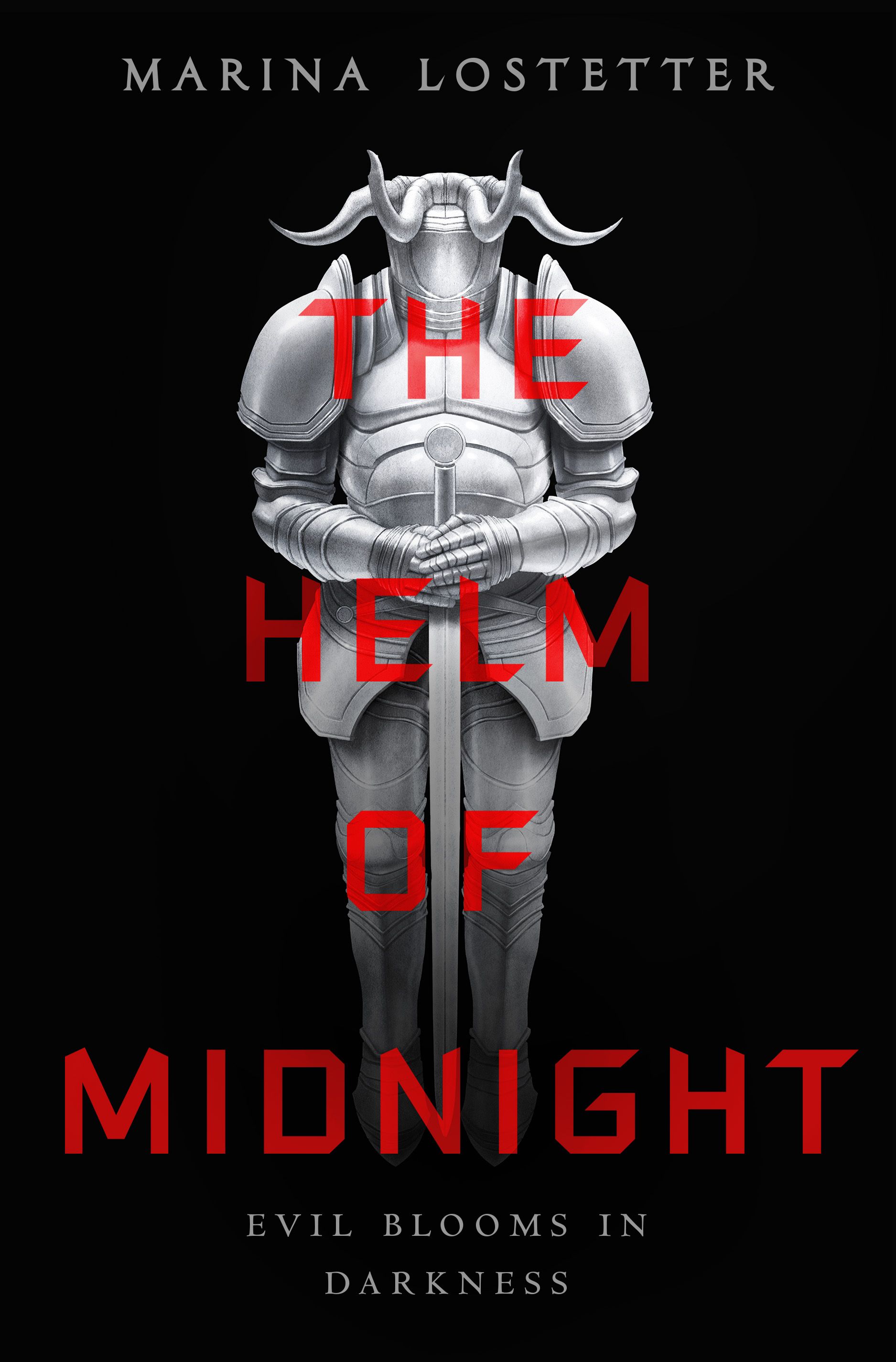
There are a couple of different angles you can come at this book from. You could accurately describe it as a cast of appealingly imperfect people doing their best to find justice as part of a generally effective magic ATF agency in a queernorm world. But you could equally say the key things to note are that the agency is part of a quite oppressive state in a crapsack world where magic walls hold monsters out of a large valley where humanity survives and the whole thing is served up with a fair bit of graphic murder and a side of body horror.
The genius of the book is that it is absolutely both; it’s dark fantasy that still hasn’t lost faith in the basic decency of at least some of its characters,and it’s also a story of duty and a genuine search for justice that doesn’t shy away from the limited ability of its characters to find it. The worldbuilding is hugely creative, the prose evocative, and the character work excellent. The plot expands considerably from its original mystery, but that mystery still does great work driving the action forward. An accomplished fantasy mystery that’s an awkward fit in any particular marketing category and is, to my mind, all the better for it.
The Five Penalties: Book 1
Hannibal meets Mistborn in Marina Lostetter’s The Helm of Midnight, the dark and stunning first novel in a new trilogy that combines the intricate worldbuilding and rigorous magic system of the best of epic fantasy with a dark and chilling thriller.
In a daring and deadly heist, thieves have made away with an artifact of terrible power—the death mask of Louis Charbon. Made by a master craftsman, it is imbued with the spirit of a monster from history, a serial murderer who terrorized the city.
Now Charbon is loose once more, killing from beyond the grave. But these murders are different from before, not simply random but the work of a deliberate mind probing for answers to a sinister question.
It is up to Krona Hirvath and her fellow Regulators to enter the mind of madness to stop this insatiable killer while facing the terrible truths left in his wake.
Award nominations: None.
Freya Marske: A Marvellous Light (Tordotcom)
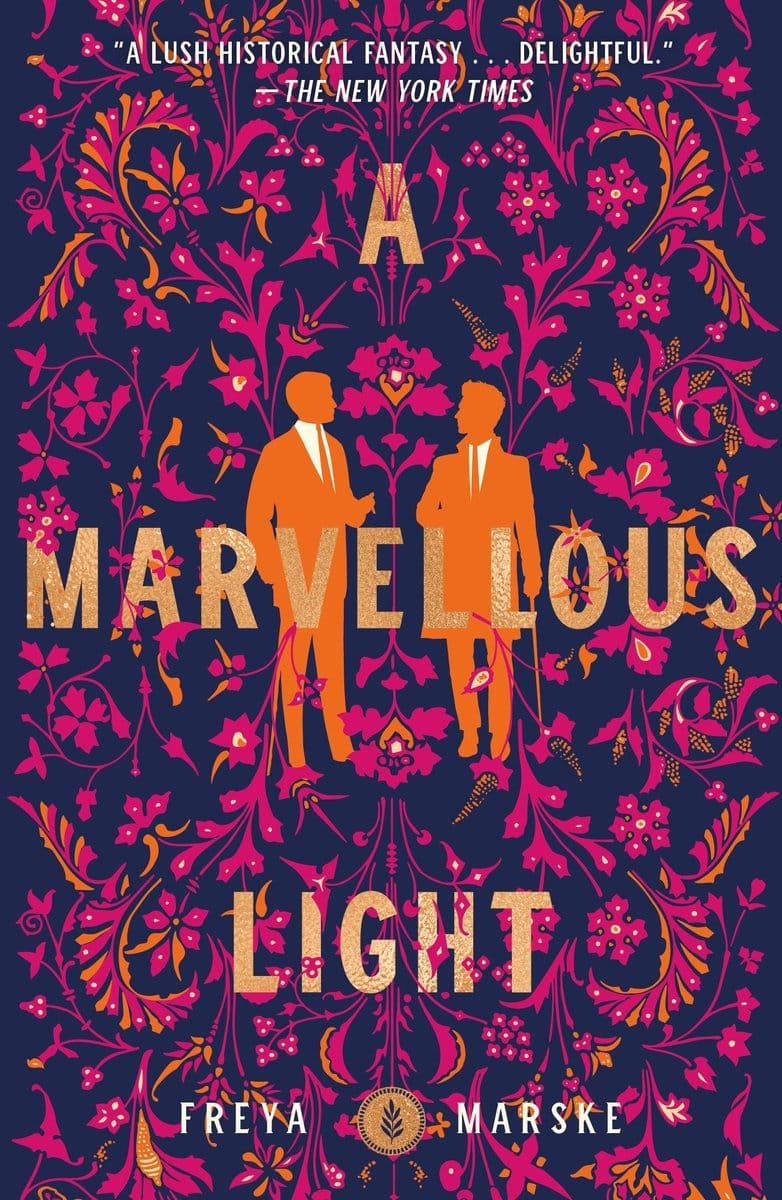
Exquisitely crafted historical fantasy with a prominent gay romance subplot. And I mean really exquisitely crafted. The prose is great, the descriptions of Edwardian houses appropriately lavish, the social interactions well-observed. Our central characters in Robin and Edwin are well-observed and their chemistry as their attraction grows is great. We also have a thoughtfully built magic system and a core mystery plot that is far more interesting than is typical for fantasy mysteries. And Marske gets the judiciously placed sex scenes right, in a way that a lot of fiction with male-male romance elements doesn’t. All in all a remarkably well-executed debut novel.
The Last Binding: Book 1
Robin Blyth has more than enough bother in his life. He’s struggling to be a good older brother, a responsible employer, and the harried baronet of a seat gutted by his late parents’ excesses. When an administrative mistake sees him named the civil service liaison to a hidden magical society, he discovers what’s been operating beneath the unextraordinary reality he’s always known.
Now Robin must contend with the beauty and danger of magic, an excruciating deadly curse, and the alarming visions of the future that come with it—not to mention Edwin Courcey, his cold and prickly counterpart in the magical bureaucracy, who clearly wishes Robin were anyone and anywhere else.
Robin’s predecessor has disappeared, and the mystery of what happened to him reveals unsettling truths about the very oldest stories they’ve been told about the land they live on and what binds it. Thrown together and facing unexpected dangers, Robin and Edwin discover a plot that threatens every magician in the British Isles—and a secret that more than one person has already died to keep.
Award nominations: Locus Award; Ditmar Award; Aurealis Award; Hugo for Best Series in 2024
Everina Maxwell: Winter's Orbit (Tor)
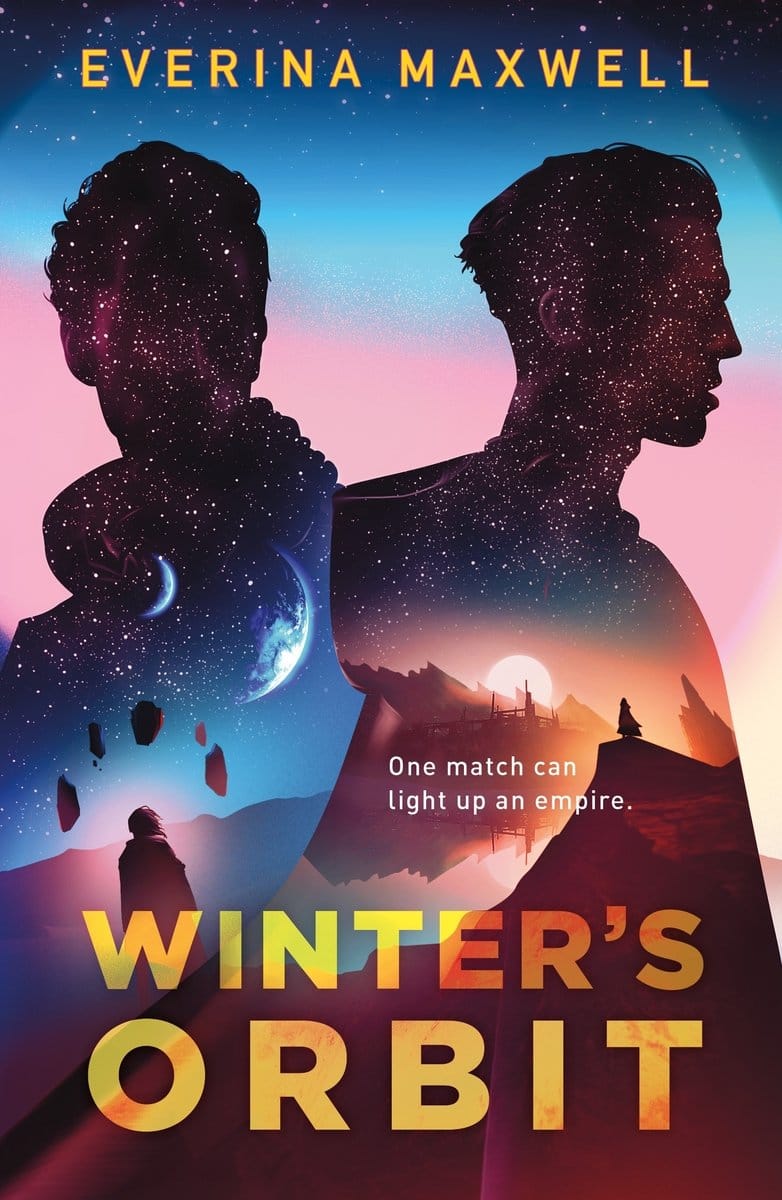
What if Bujold but gay? That’s it, that’s the novel. And god, is it a great setup. The vibe is very much mid-late Vorkosigan – think Komarr or Cetaganda – with political shenanigans, sparkling dialogue, and intermittent action with a nicely light touch, with the key difference being that our main character, Kiem, is a far closer analogue to Ivan than he is to chaos goblin Miles (Maxwell’s second book takes up that challenge). Warm, funny, attractive, competent, combined with being just a little bit lazy and would rather stay out of the limelight and out of trouble thank you very much but somehow keeps finding both. The book lives and dies on the vibe between Kiem and his shy, traumatised arranged husband, Jainan, and said vibe is impeccable, with the rest of the story effectively getting out of the way and showcasing that. In its initial form it was an original fic (The Course of Honour), it was expanded and revised for publication, and although I’m not sure all the additions were entirely necessary, the extra level of polish provided by Tor really helps what had been a diamond in the rough shine as it deserved.
Prince Kiem, a famously disappointing minor royal and the Emperor’s least favorite grandchild, has been called upon to be useful for once. He’s been commanded to fulfill an obligation of marriage to the representative of the Empire’s newest and most rebellious vassal planet. His future husband, Count Jainan, is a widower and murder suspect.
Neither wants to be wed, but with a conspiracy unfolding around them and the fate of the Empire at stake, they will have to navigate the thorns and barbs of court intrigue, the machinations of war, and the long shadows of Jainan’s past, and they’ll have to do it together.
So begins a legendary love story amid the stars.
Award nominations: Locus Award; Kitschies Awards; Goodreads Choice Award for both Science Fiction and Debut. Astounding Award (for Maxwell as author)
Megan E O'Keefe: Catalyst Gate (Orbit)
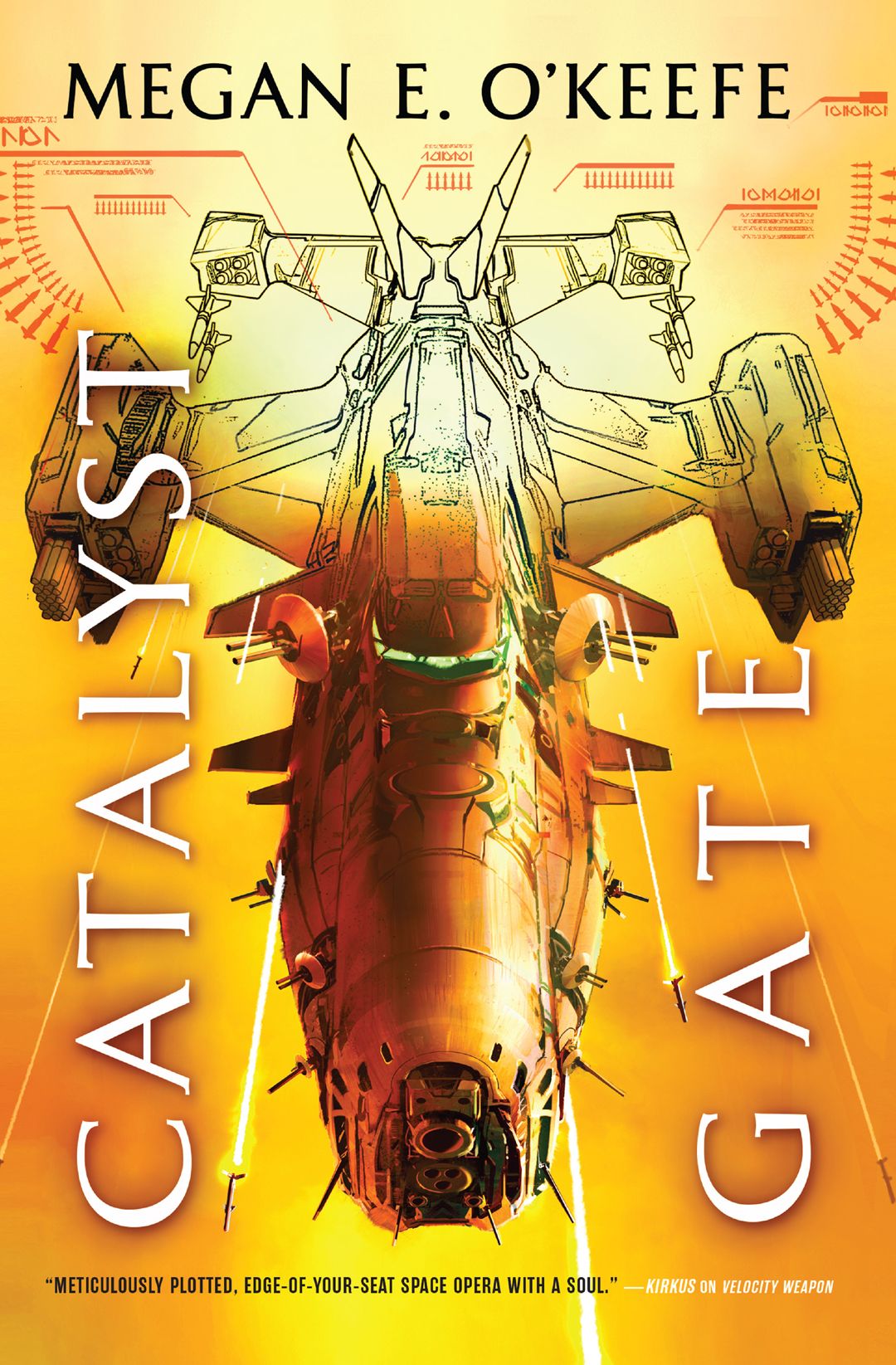
The first book of O’Keefe’s Protectorate series (Velocity Weapon) turns on one of the truly great twists of recent SFF. That’d be enough for it to be notable, so it’s to O’Keefe’s credit that the rest of the series from that point, including its conclusion in Catalyst Gate, is really great space opera in its own right. Top tier worldbuilding, tense actions, and rock solid character work lead to something a cut above much of the genre. The book also has a quite interesting approach to queerness, in that while the main character appears to be straight (certainly all her romantic leanings on page are towards men), virtually the entire rest of the main cast is queer, from her gay dads to her bi brother, their enby hacker ally, the queer woman anti-villain and more. The vibes are also well-pitched, reminding me in a lot of ways of K B Wagers – found family and a scrappy crew of That One Ship, but also the stakes are high and the loss and tragedy is not glossed over. Each tendency is enhanced by being placed in contrast with the other. Put it all together and you have an impressive capstone to an impressive series.
The Protectorate: Book 3
In the final book of this explosive Philip K. Dick Award-nominated space opera, the universe is under threat and an ancient alien intelligence threatens to bring humanity down - unless Major Sanda Greeve and her crew can stop it...
The code has been cracked. The secrets of the Casimir gates have been revealed. But humanity still isn't safe. The alien intelligence known as [spoiler] and her clones are still out there, hell-bent on its destruction. And only Sanda can stop them.
With the universe's most powerful ship under her command and some of the most skilled hackers, fighters and spies on her team, it will still take everything she has to find the key to taking down an immortal enemy with seemingly limitless bodies, resources and power.
Award nominations: None.
Cadwell Turnbull: No Gods, No Monsters (Blackstone)
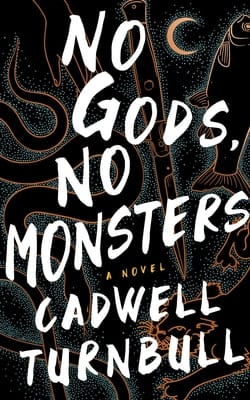
For a book whose premise is that monsters are real and evidence of such has just been released on social media, No Gods, No Monsters is profoundly human. It uses that premise to explore some quite uncomfortable themes about what we are willing to see clear evidence of and ignore, or react in fear and anger, and what it means to refuse to go with that prevailing tide. The focus of the book’s many narrative threads is on Laina (who released the evidence that her brother, shot by police, was in fact a werewolf), her (trans; ace) husband Rainey, and Laina’s girlfriend Rebecca, but depth is given to the world by the intersection of many other characters and perspectives. One of these threads is in the first person, while the rest of the book is in the third, and the reason for this, when eventually revealed, shows Turnbull is doing far more than playing narrative games for the sake of it by formatting the story in this way. Audacious, impactful, and just really, really good. This one did get some award attention, and it entirely deserved it.
Convergence Saga: Book 1
One October morning, Laina gets the news that her brother has been shot and killed by Boston cops. But what looks like a case of police brutality soon reveals something much stranger.
Monsters are real. And they want everyone to know it.
As creatures from myth and legend come out of the shadows, seeking safety through visibility, their emergence sets off a chain of seemingly unrelated events. Members of a local werewolf pack are threatened into silence. A professor follows a missing friend’s trail of bread crumbs to a mysterious secret society. And a young boy with unique abilities seeks refuge in a pro-monster organization with secrets of its own. Meanwhile, more people start disappearing, suicides and hate crimes increase, and protests erupt globally, both for and against the monsters. At the center is a mystery no one thinks to ask: Why now? What has frightened the monsters out of the dark? The world will soon find out.
Award nominations: Shirley Jackson Award; Locus Award; Manly Wade Wellman Award; PEN Open Book Award (longlist).
Award wins: Lambda Award.
Cynthia Zhang: After the Dragons (Stelliform)
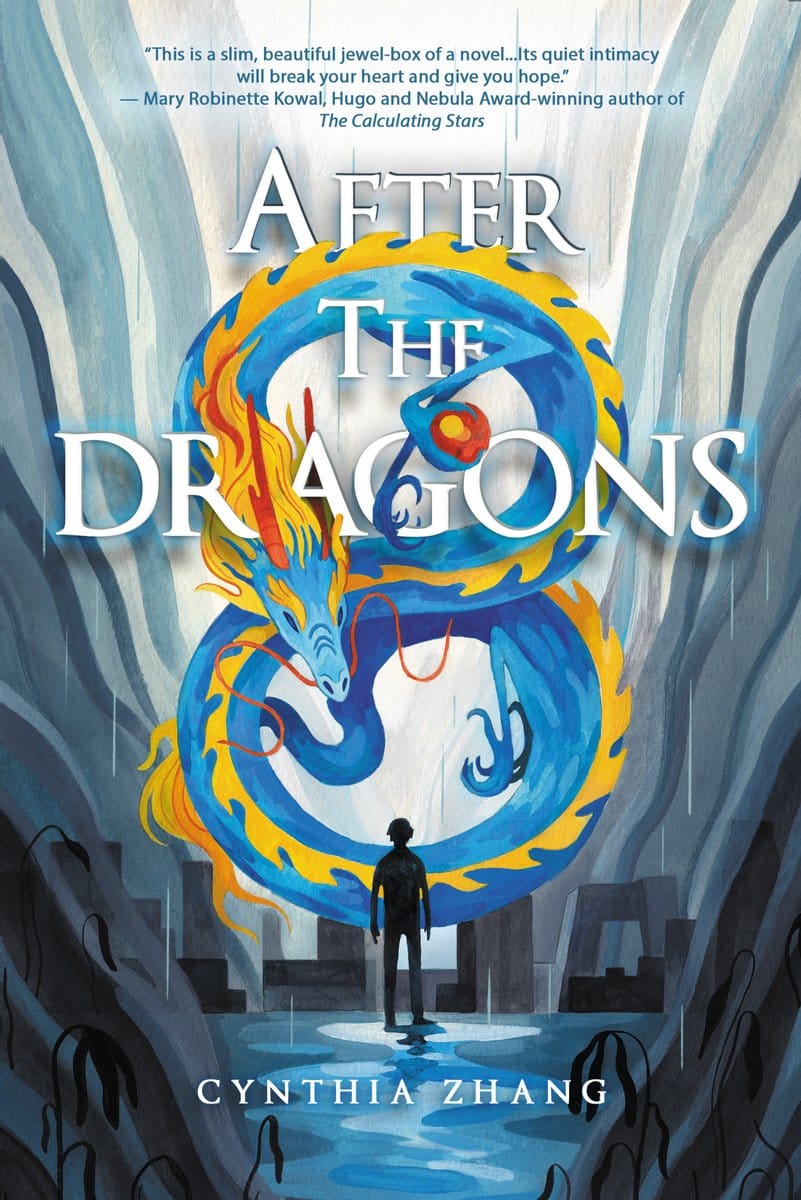
A quiet, beautiful novella about, as Leah Rachel von Essen argues, the value, the potential, and the limits of care and community. The drought-afflicted future the novel depicts is sketched in carefully and efficiently within the constraints of the book’s short page count. And the (tentative; romantic) relationship between the two leads movingly conveyed. The key to its success is that the hope and optimism it offers is clear-eyed: no utopianism here, no promises of a perfect future, just potential for a future a bit better than now if we’re willing to do the work to get there. In a pretty grim present, that’s something we could all do with. Shortlisted for the inaugural Le Guin Prize, and wholly deserved that recognition. It really deserves more.
Dragons were fire and terror to the Western world, but in the East they brought life-giving rain…
Now, no longer hailed as gods and struggling in the overheated pollution of Beijing, only the Eastern dragons survive. As drought plagues the aquatic creatures, a mysterious disease—shaolong, or “burnt lung”—afflicts the city’s human inhabitants.
Jaded college student Xiang Kaifei scours Beijing streets for abandoned dragons, distracting himself from his diagnosis. Elijah Ahmed, a biracial American medical researcher, is drawn to Beijing by the memory of his grandmother and her death by shaolong. Interest in Beijing’s dragons leads Kai and Eli into an unlikely partnership. With the resources of Kai’s dragon rescue and Eli’s immunology research, can the pair find a cure for shaolong and safety for the dragons? Eli and Kai must confront old ghosts and hard truths if there is any hope for themselves or the dragons they love.
Award nominations: Le Guin Prize
Spotlight (still not an award)
Melissa Scott: Water Horse (Candlemark & Gleam)
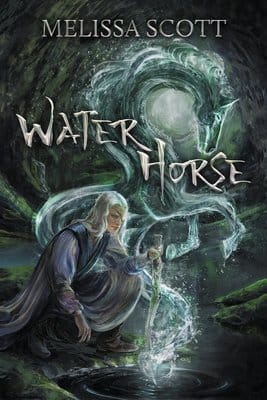
Melissa Scott is a legend in queer SFF (and should pretty obviously be seen as a legend in SFF generally as well). From the very solid Roads of Heaven trilogy in the mid 80s, through mid 90s classics like Trouble and her Friends and Night Sky Mine in the mid 90s and (originally with Lisa A Barnett) the Astreaint series spanning 25 years from the late 90s, Scott has had a career of startling consistency with a number of real high points and basically zero duds. Almost four decades into her career, Water Horse is, remarkably, a particularly lofty high point, and it’s a book I think anyone other that Scott would struggle to emulate.
A lot of modern queer fantasy, as Kai Ashante Wilson observed, is filtered through traditions of screenplay, of YA, of fanfic, of post-Wheedon quippery. The (wonderful!) explosion of queer fiction we’ve seen in the past decade and a half has also largely left behind must of the structural and linguistic norms of earlier fantasy. Scott, though, has been writing queer SFF since shortly after I was born; Water Horse shows this throughline of and fantasy tradition while also being as expansively queer as anything currently going. The diction is elevated and poetic in a way that’s very rarely present in the contemporary genre. It is not quite Tolkienesque (as Wilson notes, Scott doesn’t have Tolkien’s philology obsession), but it does feel directly descended from it, as if we’re in a better world where Water Horse was the immediate commercial response to The Lord of the Rings instead of Shannara and Thomas Covenant.
So we have a classic epic fantasy setup where there is a sun-annointed, beautiful warleader riding to defeat a queer, scarred sorcerer king and his estranged consort witch queen. Except the queer (I’d read as Kinsey 5-ish; mostly gay, situationally fine to sleep with women) sorcerer king and witch queen are unambiguously the good guys here. They rule egalitarian, collective societies who have welcomed refugees from just this invading nation who appeared each time religious repression increased at home. And without being preachy, Scott makes it clear that the invading culture is a relentlessly patriarchal, authoritarian one, seeking to mould everything it doesn’t understand (which is a lot) to its own expectations. In 2021, that resonated. In 2026, it resonates even more. Water Horse is a masterpiece which stands alone in the modern fantasy landscape, and it’s a scandal that it isn’t more widely read and has had no award recognition. Correct that for yourself if you have the opportunity.
For the last twenty years, Esclin Aubrinos, arros of the Hundred Hills, has acted jointly with Alcis Mirielos, the kyra of the Westwood, and the rivermaster of Riverholme to defend their land of Allanoth against the Riders who invade from Manan across the Narrow Sea. He has long been a master of the shifting politics of his own people and his independently-minded allies, but this year the omens turn against him. The Riders have elected a new lord paramount, hallowed servant of the Blazing One, a man chosen and fated for victory.
The omens agree that Nen Elin, Esclin’s stronghold and the heart of Allanoth, will fall when a priest of the Blazing One enters its gates. Esclin needs a spirit-bonded royal sword, a talismanic weapon made of star-fallen iron, to unite the hillfolk behind him. But the same vision that called for the sword proclaimed that Esclin will then betray it, and every step he takes to twist free of the prophecies brings him closer to that doom.
Award nominations: None.